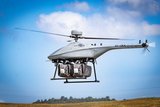
Bell restarts Venom production to meet Czech order
The first UH-1Y helicopter destined for the Czech Republic. (Photo: Bell Textron)
Commonality of parts with the AH-1Z has allowed Bell to maintain important component supply chains for UH-1Y manufacturing.


Bell Textron announced on 19 July that it has resumed UH-1Y Venom helicopter production to fulfil an FMS contract to produce and deliver eight UH-1Ys and four AH-1Z Viper helicopters for the Czech Republic.
Subcontractor Crestview Aerospace completed manufacturing the first of eight UH-1Y cabins at its Florida facility. The aircraft will complete final assembly at the Bell facility in Amarillo, Texas.
The company delivered the final UH-1Y for the USMC programme of record in April 2018, but it continued producing and delivering the AH-1Z under a production contract for 349 H-1 aircraft (160 Venoms and 189 Vipers).
The UH-1Y shares 85% commonality of parts with the AH-1Z, including the same engines, integrated mission system and four-bladed rotor. This commonality has enabled critical component supply chains to remain active during AH-1Z production for the USMC, Bell noted.
Bell anticipates USMC production of the AH-1Z until early 2022, followed by continued production for foreign military customers, including Bahrain, which ordered 12 helicopters. According to Shephard Defence Insight, these Vipers will supplement a fleet of Royal Bahrain Air Force AH-1 Cobras (AH-1Es, AH-1Fs and TAH-1P trainer helicopters).
Related Programmes in Defence Insight
Related Equipment in Defence Insight



More from Air Warfare
-
![AFA 2026: US Air Force examines uncrewed cargo aircraft for contested logistics]()
AFA 2026: US Air Force examines uncrewed cargo aircraft for contested logistics
The US Air Force is evaluating demonstrators for uncrewed cargo missions as it considers logistics requirements across the Pacific and other contested environments.
-
![Europe risks losing control of CUAS production capacity as manufacturers look abroad]()
Europe risks losing control of CUAS production capacity as manufacturers look abroad
European counter-drone developers are securing early orders in the Middle East while slow domestic acquisition processes threaten to redirect production capacity, expertise and investment away from Europe.
-
![India’s rotary-wing capability gap grows as IMRH programme delays persist]()
India’s rotary-wing capability gap grows as IMRH programme delays persist
With IMRH and DBMRH potentially years from service, India faces a widening rotary-wing capability gap that could drive further foreign purchases even as HAL and Safran build the foundations of an indigenous successor.