Baykar’s Kemankes 1 missile completes maximum flight and dive test
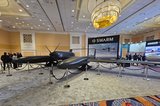
The Kemankes 1 was launched two years ago during TEKNOFEST 2023. (Photo: Baykar)
This is the latest test in the ongoing schedule for the loitering munition from Baykar – the first of two different AI-powered variants.


Baykar has announced that its Kemankes 1 AI-powered cruise missile has completed its maximum flight and dive test.
Two missiles were launched from Baykar’s Flight Training and Test Centre aboard a Bayraktar TB2, according to the company, before being released and flying 100km to their intended targets.
The testing schedule of the loitering munition is “progressing successfully”, Baykar added.
Related Articles
Baykar unveils Kemankeş mini cruise missile to augment TB2 drone’s strike capability
New Turkish Kemankes loitering munition begins testing
The Kemankes 1 is designed to be launched from uncrewed aerial vehicles (UAVs) such as Baykar’s Akinci, Bayraktar TB2 and TB3. Earlier milestones were achieved at the start of March 2025, with the successful cruise test of the missile from a Bayraktar TB2 UAV.
According to the company, the AI guidance system gives the missile the ability to identify and engage targets with accuracy, even under challenging conditions. It has a maximum dive speed of 400 KIAS and range of up to 150km.
Based on the loitering munition’s MTOW of 40kg, Shephard estimated its gross unit cost was around US$100,000, and its flyaway unit cost between $85,000 and $65,000.
Tests for the second version of the Kemankes – dubbed Kemankes 2 – began in April 2024 .
According to Baykar, that version is designed to conduct deep-strike missions on high-priority targets.
Shephard reached out to Baykar for further comment.
Related Equipment in Defence Insight

More from Air Warfare
-
![US Navy moves EA-18G Growler Block II electronic-attack upgrade into full-rate production]()
US Navy moves EA-18G Growler Block II electronic-attack upgrade into full-rate production
A US$184.25 million contract for Next Generation Electronic Attack Units advances the Growler’s modernisation as the US Navy confronts ageing systems, parts shortages and obsolescence.
-
![USAF eyes sensor and weapon upgrades as MH-139A Grey Wolf achieves IOC]()
USAF eyes sensor and weapon upgrades as MH-139A Grey Wolf achieves IOC
The Grey Wolf has entered operational service nearly three years later than originally planned, while new sustainment contracts indicate that some UH-1Ns could remain supported until 2031.
-
![How geopolitics and new military alliances are disrupting combat aircraft procurement]()
How geopolitics and new military alliances are disrupting combat aircraft procurement
Selection of fighter aircraft by national governments has always been political. As markets and allegiances shift against a background of global realignment, who will be the winners and losers as new entrants compete with established suppliers?
-
![Singapore’s interest in GCAP reflects its long-term approach to air power]()
Singapore’s interest in GCAP reflects its long-term approach to air power
A potential interest in joining GCAP is indicative of Singapore’s long-term and methodical approach to defence procurement and could benefit its local defence industry.