Air Warfare magazine: attack helicopters, F-35 update and more
Read the latest edition of Air Warfare for free in our app or on your desktop.


Comment
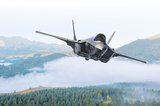
Even though the Defence Command Paper was published in March, it remains unclear how many F-35 Lightning II aircraft the UK MoD is planning to acquire.
Features include:

DÉJÀ VU ALL OVER AGAIN
Despite years of development, the F-35 schedule needs another major fix due to technical difficulties, and the programme is facing new challenges inside the Pentagon.
Other features include:
BLOCK PARTY
As manufacturers move to upgrade older attack helicopters with new kit, operators can expect to see more powerful mission systems and benefit from greater self-protection capabilities. Shephard examines end-user needs and assesses what long-term changes to the threat environment will mean for this class of aircraft.
KEEPING AN EYE OUT
As HALE UAS are gradually becoming key ISR assets in potential regional near-peer confrontations, questions are raised about how the platforms will evolve in order to meet end-user expectations and maintain a tactical edge.
ALL EYES NORTH
Ongoing conflicts, combat losses, capability upgrade requirements and heightened competition are the factors driving aircraft procurements in the African market. Meanwhile, many funding issues remain unresolved. Shephard Defence Insight analyses the region with a focus on North Africa.
UPWARD SPIRAL
FVL continues to stand as the centrepiece of US Army aviation modernisation and showcases cutting-edge rotary-wing technology, but as crucial decisions for FARA and FLRAA loom, defence industrial base matters weigh heavier on the minds of manufacturers.
REFRESH AND REBOOT
Since new fighter aircraft are highly expensive to procure and operate, many air forces are opting for upgraded platforms as the addition of modern systems and weapons can extend their service life while maintaining operational readiness.





More from Air Warfare
-
![Germany air focus: Europe’s leading near-term air market targets domestic industry]()
Germany air focus: Europe’s leading near-term air market targets domestic industry
Between 2026 and 2032, almost a quarter of EU aircraft spending is expected to come from Germany. While crewed programmes seek modernisation and replacement, uncrewed opportunities look to introduce entirely new capabilities, with both highlighting sovereignty and domestic production.
-
![Europe risks losing control of CUAS production capacity as manufacturers look abroad]()
Europe risks losing control of CUAS production capacity as manufacturers look abroad
European counter-drone developers are securing early orders in the Middle East while slow domestic acquisition processes threaten to redirect production capacity, expertise and investment away from Europe.
-
![India’s rotary-wing capability gap grows as IMRH programme delays persist]()
India’s rotary-wing capability gap grows as IMRH programme delays persist
With IMRH and DBMRH potentially years from service, India faces a widening rotary-wing capability gap that could drive further foreign purchases even as HAL and Safran build the foundations of an indigenous successor.
-
![AFA 2026: Swarm Aero eyes 2027 Gamera flight as Textron/Merlin reveal SkyCourier UX]()
AFA 2026: Swarm Aero eyes 2027 Gamera flight as Textron/Merlin reveal SkyCourier UX
Two new uncrewed aircraft concepts target very different US military requirements, from massed long-range strike to autonomous logistics. Shephard spoke with executives from Swarm Aero, Textron Aviation and Merlin Labs at this year's AFA Air, Space & Cyber conference to learn more about their capabilities.