Work starts on first Canadian Coast Guard Arctic patrol ship
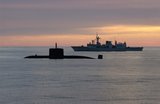
The two AOPS for the Canadian Coast Guard will follow the Royal Canadian Navy's six vessels of the same class (pictured) and keep the Irving shipyard active until work on a new frigate programme begins. (Photo: Royal Canadian Navy)
Construction on the first of two new patrol ships for the Canadian Coast Guard has started at Irving Shipbuilding in Halifax, Nova Scotia.


A steel cutting ceremony on 8 August initiated works on the first Canadian Coast Guard (CCG) Arctic and Offshore Patrol Ship (AOPS) which will be delivered in late 2026.
A spokesperson from the Canadian Department of National Defence (DND) told Shephard that the start of construction for the second ship ‘is planned for September 2024, with delivery in late-2027’.
A representative of Fisheries and Oceans Canada told Shephard that the total cost for the design, construction and transition into service of the two AOPS is ‘approximately C$2.1 billion’ and once the vessels are delivered and fully accepted, the CCG will
Our news & analysis is now part of Defence Insight®
A Basic-level or higher Defence Insight subscription is now required to view this content.




More from Naval Warfare
-
![Canada’s submarine availability under pressure as Chicoutimi is unlikely to return to front-line duties]()
Canada’s submarine availability under pressure as Chicoutimi is unlikely to return to front-line duties
HMCS Victoria and HMCS Windsor could return from their current deep maintenance, but unconfirmed operational timelines leave questions over patrol capacity before the first CPSP arrives.
-
![Poland’s naval modernisation plans point to $13 billion market]()
Poland’s naval modernisation plans point to $13 billion market
Poland is reshaping its naval capabilities through investments in surface and undersea fleets, with further procurement opportunities expected into the 2030s.
-
![Autonomy gives Turkey a chance to outflank established naval shipbuilders]()
Autonomy gives Turkey a chance to outflank established naval shipbuilders
Turkish shipbuilders have sold ships from Asia to Europe, but autonomy and swarm technology could give them a fairer fight against Western European rivals.
-
![France’s naval modernisation drives opportunities for European defence industry]()
France’s naval modernisation drives opportunities for European defence industry
Ahead of Euronaval 2026, major submarine, frigate and aircraft carrier programmes are driving investment, while future corvette replacements and growing interest in uncrewed vessels offer further opportunities for industry into the 2030s and beyond.