What new technologies could be involved in UK Atlantic Bastion initiative?
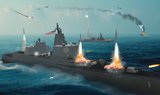
The Royal Navy has made significant progress on uncrewed vessels this year, including its testing of five Syos Aerospace Rattler vessels earlier this year which were controlled from 500 miles away. (Photo: Royal Navy)
As new details emerge on the UK Royal Navy’s plan to secure the North Atlantic for the UK and NATO, three main areas of opportunity for new technology are the focal point.


The UK Ministry of Defence (MoD) has revealed more information this week on the UK Royal Navy’s (RN) Atlantic Bastion initiative as part of the country’s response to the growing threat of submarine and underwater activity from Russia.
Atlantic Bastion was outlined in the government’s Strategic Defence Review (SDR) 2025 published earlier this year, highlighting the RN’s role in protecting critical undersea infrastructure and maritime traffic while defending the Euro-Atlantic as part of its contribution to NATO’s regional defence plans.
In a bid to reflect the changing needs of maritime defence, as Russia continues to modernise its own capabilities at a
Already have an account? Log in
Want to keep reading this article?



More from Naval Warfare
-
![US Navy SPY-6 approaches FRP with Raytheon already having “a hot production line”]()
US Navy SPY-6 approaches FRP with Raytheon already having “a hot production line”
Jen Gauthier, Raytheon’s VP of Naval Systems and Sustainment, told Shephard that the company is awaiting the US Navy’s green light to move “fully into full-rate production”.
-
![Ireland releases maritime strategy as it looks to new naval bases and stronger partnerships]()
Ireland releases maritime strategy as it looks to new naval bases and stronger partnerships
Ireland has a maritime area ten times the size of its land mass but has a limited naval capacity and faces an ongoing threat to critical underwater infrastructure. A new strategy is looking to address the challenge.
-
![How the Golden Fleet will change the US Navy acquisition process]()
How the Golden Fleet will change the US Navy acquisition process
The procurement of the future USN Golden Fleet is planned to be less bureaucratic than previous strategies, involving AI-enabled designs and scheduling tools to increase productivity and avoid delays.
-
![What capabilities are being tested under AUKUS Pillar II?]()
What capabilities are being tested under AUKUS Pillar II?
Collaboration on AUKUS Pillar II extends beyond the core trilateral agreement, presenting global opportunities for companies with advanced technologies.