USN turns to Booz Allen Hamilton for LCS support services
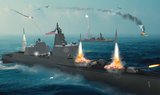
LCS vessels USS Independence (background) and USS Coronado. (Photo: USN/Chief Mass Communication Specialist Keith DeVinney)
Booz Allen Hamilton will provide a single executive for end-to-end support of LCS vessels.


The US Naval Surface Warfare Center has issued a deal worth up to $74.72 million to Booz Allen Hamilton for ‘non-personal professional support services to support the Program Executive Office Unmanned and Small Combatants mission’, the DoD announced on 14 January.
Specifically, Booz Allen Hamilton will provide a single programme executive responsible for acquiring and maintaining the littoral mission capabilities of USN Littoral Combat Ships (LCSs) ‘from end to end, beginning with procurement, and ending with fleet employment and sustainment’, the DoD added.
Work will be performed at the Washington Navy Yard and in McLean, Virginia, for completion by April 2023.

More from Naval Warfare
-
![US Navy’s $275 billion BBGN plan hinges on shipyard transformation]()
US Navy’s $275 billion BBGN plan hinges on shipyard transformation
The US Navy’s planned nuclear-powered warship carries a US$275 billion price tag, but the greater story lies in the industrial overhaul needed to build it, from AI-enabled design to digital twins and modular construction.
-
![Industry sees opportunity in Australia’s shift to networked undersea warfare]()
Industry sees opportunity in Australia’s shift to networked undersea warfare
Australia’s new defence innovation strategy indicates a shift from platform-centric to network-centric undersea warfare, with Ocius and Anduril Industries pointing to fast-growing opportunities for local industry.
-
![Asia-Pacific emerges as the largest export market for US-made USVs]()
Asia-Pacific emerges as the largest export market for US-made USVs
Asian customers have placed one of the largest known international purchases of US-built uncrewed surface vessels, highlighting accelerating regional demand for autonomous maritime capabilities and distributed naval operations.