US Navy places small boat order worth up to $290 million
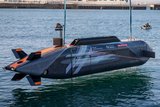
Metal Shark Defiant patrol boat has been in service with the US Navy and has been exported to Ukraine. (Photo: Metal Shark)
The Metal Shark 40 Defiant, a 40-foot, welded-aluminium pilothouse monohull patrol boat, features ballistic protection and can be armed with a range of remotely operated and crew-served weapons systems. The ReconCraft 40ft patrol boat is similar and offers waterjet, outboard and inboard/outboard propulsion.


Gravois Aluminium Boats will supply up to 73 small patrol boats to Naval Expeditionary Combat Command under a indefinite delivery/indefinite-quantity, multiple award contract that could be worth up to US$290 million over seven years.
The boats will be built by Garvis subsidiaries Metal Shark and ReconCraft with the former awarded awarded a $6.5 initial order and the latter $7.7 million.
The orders under the initial contract are expected to be completed by the end of next year with ReconCraft’s boats funded from National Guard and Reserve Equipment Appropriations and Metal Shark boats from the US Navy.
This contract was competitively procured via the Procurement Integrated Enterprise Environment with four offers received with US Navy Naval Sea Systems Command as contracting activity.
In 2023, ReconCraft was awarded contract worth almost $36 million to supply the US Navy with 12 40-ft patrol boats with work on the boats running through September 2025.
Metal Shark was awarded a initial order in 2017 from the US Navy for 11 PB(X) which was for the Defiant 40. Under the terms of the award, potentially worth more than $90 million, Metal Shark will build up to 50 PB(X) vessels for the navy, along with trailers, spares, training packages and technical support.
Related Programmes in Defence Insight
Related Equipment in Defence Insight




More from Naval Warfare
-
![All eyes on Royal Navy’s Type 93 market engagement as industry prepares bids]()
All eyes on Royal Navy’s Type 93 market engagement as industry prepares bids
Responses are due by 29 October as the Royal Navy tests the market, with BAE Systems’ Herne and MSubs’ Excalibur setting up a contest where payloads may decide the winner.
-
![From Poland to the Pacific: can Miecznik become a blueprint for other navies?]()
From Poland to the Pacific: can Miecznik become a blueprint for other navies?
Babcock is taking its Polish industrial partnership approach to Denmark and New Zealand as navies seek sovereign shipbuilding skills alongside ships.
-
![Unsettled waters in the North: can navies still trust their Arctic acoustic maps?]()
Unsettled waters in the North: can navies still trust their Arctic acoustic maps?
The changing Arctic environment is creating new challenges for submarine detection, driving demand for distributed sensors, uncrewed underwater vehicles and real-time acoustic modelling.