USN orders Trident guidance systems
Mk6 guidance systems will be installed on Trident II D5 missiles for the UK and US navies.


Charles Stark Draper Laboratory is to produce Mk6 guidance systems for Trident II D5 ballistic nuclear missiles carried by USN and UK RN submarines, under a $207.52 million contract from USN Strategic Systems Programs.
Work will be carried out at four US locations for completion by 30 July 2025, the DoD announced on 26 February.
Most of the contract funds come out of the USN FY2021 procurement budget, with $3.23 million from UK funds.
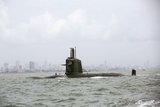
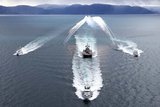
Trident II D5 nuclear missiles are designed to be launched from USN Ohio-class and future Columbia-class submarines, as well as from RN Vanguard-class boats (pictured).
The Mk6 guidance system comprises a flight control electronics assembly and inertial sensors with an associated measurement unit. The electronics assembly interfaces with the fire control system on the submarine. The inertial measurement unit provides navigation information to the mission computer.
Charles Stark Draper Laboratory is already working on a $133.47 million contract modification from the USN to research potential applications of guidance technologies for submarines. Work on this project is due to be completed in September 2021.
As part of our promise to deliver comprehensive coverage to our Defence Insight and Premium News subscribers, our curated defence news content provides the latest industry updates, contract awards and programme milestones.


More from Naval Warfare
-
![Force renewal in the Royal Canadian Navy opens long-term opportunities for suppliers]()
Force renewal in the Royal Canadian Navy opens long-term opportunities for suppliers
Canada's ambitious naval modernisation plans are creating major maritime procurement opportunities, with future programmes also promising long-term work for domestic and international shipbuilders.
-
![The unanswered design question at the heart of India’s P75I submarine programme]()
The unanswered design question at the heart of India’s P75I submarine programme
ThyssenKrupp Marine Systems is edging toward an India submarine deal, but an unverified claim of a radically new hull design – at odds with the proven lineage it has marketed to Canada – has yet to be resolved.
-
![Canada’s selection of TKMS for its new patrol submarines reflects rising Arctic competition]()
Canada’s selection of TKMS for its new patrol submarines reflects rising Arctic competition
The decision points to deepening NATO cooperation and mounting competition in the Arctic and North Atlantic, as Canada opts for a European-designed solution despite interest from South Korea.
-
![US Navy’s MUSV programme could lay the USV procurement blueprint for NATO allies]()
US Navy’s MUSV programme could lay the USV procurement blueprint for NATO allies
The programme’s structure as a marketplace will allow multiple companies to compete for ongoing procurements; an approach which could be replicated across the Atlantic.