US Navy retains Lockheed Martin for additional Integrated Submarine Imaging System work
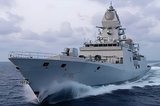
USS Seawolf. (Photo: USN)
The USN has ordered engineering services for the Integrated Submarine Imaging System.


Lockheed Martin Rotary and Mission Systems is providing the USN with engineering services and other direct costs in support of the Integrated Submarine Imaging System (ISIS).
ISIS delivers all-weather, high-resolution imagery for Los Angeles-class, Seawolf-class, Ohio-class and Virginia-class submarines.
Work on the latest $54.01 million contract modification from Naval Sea Systems Command will be performed at six US locations for completion by September 2023, the DoD announced on 8 September.
ISIS is a visual and digital imaging programme for submarine periscopes that replaces an optical system with high-resolution cameras and fibre-optic imagery that feeds into a digital video display.
The resulting images and footage can be transmitted to displays in various locations on a submarine.
The architecture of the programme makes use of latest-generation components while also allowing for future upgrades.
The original $92.8 million ISIS contract was awarded to Lockheed Martin by the USN in 2009 and it has been modified repeatedly since then.
Related Equipment in Defence Insight

More from Naval Warfare
-
![Competitive P17B tender marks a shift in Indian Navy frigate procurement]()
Competitive P17B tender marks a shift in Indian Navy frigate procurement
The Indian Navy's P17B programme is expected to combine greater weapons capacity with a competitive domestic construction model, although key systems could remain dependent on international supply chains.
-
![China’s mineral processing dominance exposes naval supply chain vulnerabilities]()
China’s mineral processing dominance exposes naval supply chain vulnerabilities
Competition for critical minerals, and China’s dominance of their processing, is emerging as a decisive factor in future naval procurement programmes.
-
![Suppliers await next step in Australia’s mine warfare transition]()
Suppliers await next step in Australia’s mine warfare transition
Australia’s mine countermeasure capability remains in flux as the Huon-class nears retirement, but accelerated investment in autonomous systems is opening a path for industry.
-
![Can the US Navy ask Indo-Pacific allies to do more while training with them less?]()
Can the US Navy ask Indo-Pacific allies to do more while training with them less?
As the Iran War draws US ships and marine corps units away from the Indo-Pacific, curtailed exercises and a temporary carrier gap are exposing tensions between Washington’s demand for more self-reliant allies and the joint training needed to realise that ambition.