Tomahawk missiles and optronics axed from Royal Australian Navy Collins submarine upgrade
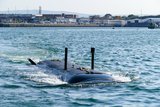
RAN Collins-class submarines will be replaced by Virginia-class nuclear-powered submarines in the early 2030s. (Photo: Australian DoD)
Australia’s Collins-class consists of six submarines commissioned between 1996 and 2003 based on the Type 471 design from Swedish shipbuilder Kockums. New nuclear-powered submarines will replace the Collins-class in the 2030s.


The Australian Government has outlined plans worth AUD4 billion (US$2.6 billion) to AUD5 billion to upgrade and extend the life of the Royal Australian Navy’s (RAN’s) six Collins-class submarines with the HMAS Farncombe going into dock in 2026.
A previously announced optronics upgrade has been scrapped and it has been decided that Tomahawk missiles will not be added to the boats.
According to Defence Australia, the government department responsible for defence, the optronics upgrade “will not proceed following advice that it would have added complexity and risk to the life-of-type extension programme [and that] adding Tomahawk cruise missile capability is not viable and does not represent value for money”.
“These decisions will reduce risk for the Collins class programme and will help maximise availability as we transition to our future nuclear-powered submarine capability,” the Defence Australia stated.
The department added that the SSN AUKUS nuclear-powered conventionally-armed submarines which will replace Collins-class will likewise not be fitted with the optronics system.
The Virginia-class nuclear-powered submarines Australia will receive in the early 2030s will come with the Tomahawk as standard equipment.
Tomahawk cruise missiles will also be used by RAN’s Hobart-class destroyers and the Government has agreed in-principle to fit the Hunter-class frigates with Tomahawks, subject to a feasibility study.
Related Programmes in Defence Insight
Project SEA 5000 Phase 1 (4-6) [Australia]
Project SEA 5000 Phase 1 (1-3) [Australia]
Related Equipment in Defence Insight

More from Naval Warfare
-
![Denmark’s air defence frigate requirement draws growing European competition]()
Denmark’s air defence frigate requirement draws growing European competition
With no formal competition under way, industrial partnerships, production capacity and air defence capability could all shape the programme as Denmark considers how to replace its three Iver Huitfeldt-class frigates.
-
![Singapore expands maritime presence with future-ready Sentinel OPV]()
Singapore expands maritime presence with future-ready Sentinel OPV
Singapore is building space for uncrewed systems and future technologies into its new Sentinel-class OPVs, reflecting a wider move towards adaptable vessels capable of maintaining persistent maritime presence.
-
![From the Baltic to the Gulf: where USV procurement is heading next]()
From the Baltic to the Gulf: where USV procurement is heading next
Saildrone’s new Copenhagen base is one sign of a larger shift, as navies globally turn to uncrewed vessels for surveillance and mine clearance.