Three USN destroyers return from deployment


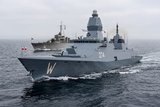
Three US Navy Arleigh-Burke-class guided-missile destroyers have returned to Norfolk Naval Station after a seven-month deployment to the US 6th and 5th Fleet areas of operations, which saw the vessels navigate more than 45,000 nautical miles.
The ships - USS Mason (DDG 87), USS Nitze (DDG 94), and USS Bainbridge (DDG 96) - deployed in April as part of Destroyer Squadron (DESRON) 2 and Carrier Strike Group (CSG) 12 that are supporting maritime stability and security.
‘Mason, Bainbridge and Nitze provided an adaptable and persistent force, adeptly accomplishing every mission we asked of them over multiple warfare areas,’ Capt Chris Follin, commodore of DESRON 2, said.
‘I’m incredibly proud of how our sailors performed during this rigorous deployment. They can return home knowing that they made a positive impact for maritime security in some of the most consequential waterways in the world.’
During their time in the 5th Fleet area of operations, the three destroyers took part in Operation Sentinel, ensuring the free flow of merchant vessels through the heavily-transited Strait of Hormuz.
Mason and Bainbridge also assisted the tanker Kokuka Courageous in June after it was attacked in the Gulf of Oman.
While in the 6th Fleet areas of operations, the three destroyers participated in dual carrier operations in the Mediterranean with the Abraham Lincoln CSG, which conducted training with the John C. Stennis CSG.
Multilateral training with regional partners and allies was also carried out, along with several port visits to ‘enhance relationships with partner nations’, the US Navy said.
Related Equipment in Defence Insight



More from Naval Warfare
-
![Canada assesses security equipment changes for Polar Icebreaker Imnaryuaq]()
Canada assesses security equipment changes for Polar Icebreaker Imnaryuaq
The Canadian Department of National Defence is evaluating communications and reconnaissance changes for CCGS Imnaryuaq’s expanded maritime security role, while retaining its 2032 acceptance target.
-
![All eyes on Royal Navy’s Type 93 market engagement as industry prepares bids]()
All eyes on Royal Navy’s Type 93 market engagement as industry prepares bids
Responses are due by 29 October as the Royal Navy tests the market, with BAE Systems’ Herne and MSubs’ Excalibur setting up a contest where payloads may decide the winner.
-
![US Navy’s MQ-25 Stingray approaches carrier-integration tests]()
US Navy’s MQ-25 Stingray approaches carrier-integration tests
Boeing has outlined its upcoming precision-landing and carrier-airspace trials as MQ-25 manufacturing shifts towards Illinois, with initial Lot 1 deliveries expected in 2029.
-
![From Poland to the Pacific: can Miecznik become a blueprint for other navies?]()
From Poland to the Pacific: can Miecznik become a blueprint for other navies?
Babcock is taking its Polish industrial partnership approach to Denmark and New Zealand as navies seek sovereign shipbuilding skills alongside ships.