Sweden and Finland to establish joint naval force


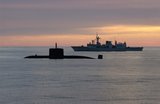
The Royal Swedish Navy (RSwN) and the Finnish Navy will establish a joint naval task force in 2017.
According to RAdm Jan Thomqvist, chief of staff of the RSwN, initial operating capability (IOC) is expected in two years and it will be able to conduct intelligence, surveillance and reconnaissance (ISR) missions.
The plan is to use cooperation with neighbouring countries to improve the recognised maritime picture (RMP) in the Baltic Sea. This is in part because of a rise in naval activity from Russia and others in the region.
‘There are a lot of things going on and it has
Our news & analysis is now part of Defence Insight®
A Basic-level or higher Defence Insight subscription is now required to view this content.




More from Naval Warfare
-
![Euronaval 2026: Baltic breakthrough powers Saildrone’s next European expansion]()
Euronaval 2026: Baltic breakthrough powers Saildrone’s next European expansion
Denmark’s doubled deployment, Mediterranean smuggling routes and Norwegian composite hulls show where uncrewed surveillance demand is heading, while British funding remains unclear.
-
![Euronaval 2026: by the power of six, Fincantieri’s MMMV reflects modular naval shift]()
Euronaval 2026: by the power of six, Fincantieri’s MMMV reflects modular naval shift
The 50m, six-person ship from the Italian shipbuilder carries swappable, containerised payloads instead of a fixed mission, reflecting a shift that is becoming increasingly evident.
-
![Canada’s submarine availability under pressure as Chicoutimi is unlikely to return to front-line duties]()
Canada’s submarine availability under pressure as Chicoutimi is unlikely to return to front-line duties
HMCS Victoria and HMCS Windsor could return from their current deep maintenance, but unconfirmed operational timelines leave questions over patrol capacity before the first CPSP arrives.
-
![Patrol vessel demand and partnerships anchor North Africa’s naval market]()
Patrol vessel demand and partnerships anchor North Africa’s naval market
Fincantieri and Naval Group are positioning for long-term work in Egypt and Morocco as demand for local industrial partnerships grows.
-
![UK MoD faces ‘serious’ ASW gap as Defence Committee outlines Arctic requirements]()
UK MoD faces ‘serious’ ASW gap as Defence Committee outlines Arctic requirements
Anti-submarine warfare, uncrewed vessels and seabed monitoring top the demand list in the Defence Committee’s High North roadmap for the 2030s.