Latest Russian subsea standoff puts pressure on the UK’s seabed defence strategy
Russian warships have previously entered UK waters, necessitating monitoring by the Royal Navy. (Photo: UK Royal Navy)
UK defence secretary John Healey’s exposure of a covert Russian deep-sea operation against undersea infrastructure in the Atlantic validates the Royal Navy’s Atlantic Bastion concept but lays bare a capacity gap that autonomous systems, allied integration and sustained investment must close.


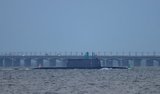
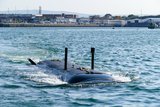
Somewhere in the cold waters north of the UK, a Russian Akula-class submarine was running deep. Two specialist platforms from Russia’s Main Directorate for Deep-Sea Research (GUGI) – vessels purpose-built to map and, if ordered, sever Britain’s cables and pipelines – were operating nearby.
For more than a month, a Royal Navy (RN) warship, Royal Air Force (RAF) P-8A Poseidon maritime patrol aircraft and allied ships and aircraft maintained surveillance of the Russian force. Some 500 British personnel were involved. Aircraft flew more than 450 hours. The frigate covered several thousand nautical miles.
The Akula retreated north. The two GUGI
Our news & analysis is now part of Defence Insight®
A Basic-level or higher Defence Insight subscription is now required to view this content.




More from Naval Warfare
-
![Israeli Navy looks to expand as war reshapes future force requirements]()
Israeli Navy looks to expand as war reshapes future force requirements
Israel’s navy is preparing for a larger and more technically diverse role, but its ambitions could be impacted by supply chain restrictions, accelerating demand for domestic naval production as well as autonomous maritime capabilities.
-
![Quantum sensing gathers pace as navies eye undersea advantage]()
Quantum sensing gathers pace as navies eye undersea advantage
As AI dominates defence conversations, industry increasingly points to quantum sensing as the technology set to change submarine and uncrewed underwater vehicle operations.
-
![Competitive P17B tender marks a shift in Indian Navy frigate procurement]()
Competitive P17B tender marks a shift in Indian Navy frigate procurement
The Indian Navy's P17B programme is expected to combine greater weapons capacity with a competitive domestic construction model, although key systems could remain dependent on international supply chains.
-
![How France’s SNLE 3G programme is reshaping the naval nuclear industrial base]()
How France’s SNLE 3G programme is reshaping the naval nuclear industrial base
Extending far beyond a four-submarine replacement programme, France’s ballistic missile submarine effort is a decades-long industrial initiative designed to preserve the country’s ability to build and sustain nuclear-powered strategic platforms.
-
![Quantum Systems enters maritime domain with Baltic-focused USV and UUV]()
Quantum Systems enters maritime domain with Baltic-focused USV and UUV
Quantum Systems has launched into the maritime domain with Seavex and Subvex, aiming to close a Baltic Sea ISR gap opened by infrastructure sabotage.