Australia’s revised defence investment plan: what it means for naval warfare
The UK has begun port visits to Australia under the Optimal Pathway, commencing with the February 2026 arrival of HMS Anson for a submarine maintenance period. (Photo: Royal Australian Navy)
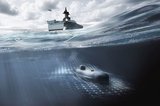
The 2026 Integrated Investment Program allocates up to A$130 billion for undersea warfare, committing the Royal Australian Navy to nuclear-powered submarines, autonomous platforms and an expanded surface combatant fleet over the next decade.


The Australian government, on 16 April, released its 2026 National Defence Strategy (NDS) and accompanying Integrated Investment Program (IIP), outlining approximately A$425 billion (US$304.83 billion) in capability investment over the decade to 2035–36.
The package includes an additional A$14 billion over the next four years and A$53 billion over the decade – bringing total additional investment across the 2024 and 2026 strategies to A$30 billion over four years and A$117 billion across the planning decade.
Defence spending as a proportion of GDP is projected to rise to 3% by 2033 under the NATO measurement approach, up from a 2024 IIP
Our news & analysis is now part of Defence Insight®
A Basic-level or higher Defence Insight subscription is now required to view this content.

More from Naval Warfare
-
![Quantum Systems enters maritime domain with Baltic-focused USV and UUV]()
Quantum Systems enters maritime domain with Baltic-focused USV and UUV
Quantum Systems has launched into the maritime domain with Seavex and Subvex, aiming to close a Baltic Sea ISR gap opened by infrastructure sabotage.
-
![China’s mineral processing dominance exposes naval supply chain vulnerabilities]()
China’s mineral processing dominance exposes naval supply chain vulnerabilities
Competition for critical minerals, and China’s dominance of their processing, is emerging as a decisive factor in future naval procurement programmes.
-
![Suppliers await next step in Australia’s mine warfare transition]()
Suppliers await next step in Australia’s mine warfare transition
Australia’s mine countermeasure capability remains in flux as the Huon-class nears retirement, but accelerated investment in autonomous systems is opening a path for industry.
-
![Can the US Navy ask Indo-Pacific allies to do more while training with them less?]()
Can the US Navy ask Indo-Pacific allies to do more while training with them less?
As the Iran War draws US ships and marine corps units away from the Indo-Pacific, curtailed exercises and a temporary carrier gap are exposing tensions between Washington’s demand for more self-reliant allies and the joint training needed to realise that ambition.