Spain says farewell to the last of its Galerna-class submarines
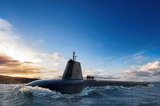
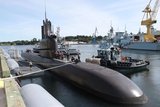
The decommissioning of the Tramontana took place in Cartagena. (Photo: Spanish Navy)
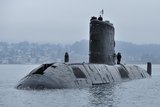
The four Spanish (S 70/Galerna) boats entered service between 1983 and 1985, but have now all been decommissioned, leaving Spain with just one active submarine.


Spain has decommissioned the last of its four Galerna-class conventional submarines, leaving the force with a single active submarine, a situation caused by 10 years of delays in introducing a new class of boats.
Tramontana was delivered in 1984 and underwent a major refit between 2014 and 2017, a programme led by Navantia. It sailed a total of 315,144nm, 218,384nm of that underwater.
The boat had participated in many national and international operations and exercises including the launching of a torpedo that sank a surface ship in October 2004.
The submarine also contributed to the outcome of the crisis of Perejil Island in 2002. Other interventions include her participation in operation ‘Unified Protector’ in Libya in 2001, as well as many NATO and EU-led missions.
In November 2023, Spanish shipbuilder Navantia delivered the first of four new ocean-going submarines that will provide the Spanish Navy with a long-awaited modern diesel-electric attack submarine (SSK) capability for the 21st century.
The S-80A Plus submarines are advanced SSKs that can conduct anti-submarine warfare, anti-surface warfare and perform an intelligence, surveillance and reconnaissance role. They have the potential for an added land-attack capability in the future with the acquisition of the Tomahawk cruise missile.
At the commissioning of Isaac Peral (S-81) Navantia stated that the second boat, Narciso Monturiol (S-82), was having the sections of its hull joined together at the same time as Cosme García (S-83) and Mateo García de los Reyes (S-84). The boats will be delivered in 2024, 2026 and 2027, respectively.

More from Naval Warfare
-
![US Navy begins SPY-6(V)4 radar testing ahead of first Arleigh Burke destroyer backfit]()
US Navy begins SPY-6(V)4 radar testing ahead of first Arleigh Burke destroyer backfit
Wallops Island trials will validate the next-generation radar's combat system integration before its installation aboard USS Pinckney, the first Flight IIA destroyer to receive the SPY-6(V)4 upgrade.
-
![A400M trial demonstrates airborne deployment of uncrewed surface vessel]()
A400M trial demonstrates airborne deployment of uncrewed surface vessel
Kraken Technology Group’s A400M airdrop of a K3 Scout uncrewed surface vessel points to a new way for navies to insert USVs into contested waters, bypassing ports and motherships.
-
![From the seas to the web: the changing shape of UK defence in Southeast Asia]()
From the seas to the web: the changing shape of UK defence in Southeast Asia
As his final engagement before leaving his post as the head of the British defence staff for Southeast Asia and defence adviser to Singapore, Brigadier Eddie Maskell-Pedersen spoke with Shephard about maritime security, cyber cooperation and long-term partnerships.