Solution offered for US Navy’s nuclear submarine availability problem
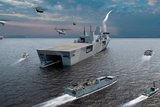
The USN has four public shipyards -- at Norfolk, Portsmouth, Puget Sound and Pearl Harbor – but these lack the capacity to properly sustain the SSN fleet. (Photo: USN)
Bartlett Maritime Corporation (BMC) has published a plan that offers a solution to the US Navy’s availability crisis with its Virginia-class nuclear-powered attack submarines (SSNs).


The Bartlett Maritime Plan identifies a need for large-scale investment in additional infrastructure, facilities and skilled personnel to expand the USN’s submarine industrial support base.
This will allow key products and equipment to be manufactured at scale and delivered to navy submarine maintenance facilities, allowing them to complete the repair and overhaul of Virginia-class SSNs much faster. It will mean the boats can spend more time on operations.
A spokesperson from the USN told Shephard that it had received the submission and “is considering this submission and all prior submissions from BMC within the broader context of navy efforts and
Our news & analysis is now part of Defence Insight®
A Basic-level or higher Defence Insight subscription is now required to view this content.


More from Naval Warfare
-
![US Navy’s $275 billion BBGN plan hinges on shipyard transformation]()
US Navy’s $275 billion BBGN plan hinges on shipyard transformation
The US Navy’s planned nuclear-powered warship carries a US$275 billion price tag, but the greater story lies in the industrial overhaul needed to build it, from AI-enabled design to digital twins and modular construction.
-
![Asia-Pacific emerges as the largest export market for US-made USVs]()
Asia-Pacific emerges as the largest export market for US-made USVs
Asian customers have placed one of the largest known international purchases of US-built uncrewed surface vessels, highlighting accelerating regional demand for autonomous maritime capabilities and distributed naval operations.
-
![Europe’s naval contractors benefit from growing refit and upgrade demand]()
Europe’s naval contractors benefit from growing refit and upgrade demand
Rheinmetall’s order to modernise the German Navy frigate Bayern points to a wider European shift towards extending warship service life as new-build programmes face delay.
-
![The UK joins the movement towards joint procurement]()
The UK joins the movement towards joint procurement
The UK will spend an estimated US$3.89 billion over the next decade in joint naval programmes, a lot of which will be in cooperation with Norway.