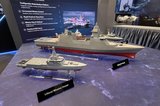
Singapore receives first LMV


The Republic of Singapore Navy (RSN) took delivery of its first Littoral Mission Vessel (LMV), Independence, from shipbuilder ST Marine on 26 May.
Independence, launched on 3 July 2015, completed harbour trials and platform acceptance tests prior to delivery to Tuas Naval Base, where it will belong to 182 Squadron of the Maritime Security Task Force.
After having completed installation of all combat and sensor systems, the next step for Independence will be installation, checkout, integration and testing (ICIT), according to Singapore’s Ministry of Defence.
From photos released, it can be seen that Independence has been fitted
Our news & analysis is now part of Defence Insight®
A Basic-level or higher Defence Insight subscription is now required to view this content.


More from Naval Warfare
-
![Chinese maritime militia puts naval surveillance to the test]()
Chinese maritime militia puts naval surveillance to the test
With record deployments in the South China Sea and a newly reported sighting east of Taiwan, China’s maritime militia is putting greater pressure on regional surveillance. How can navies establish what these vessels are doing quickly and reliably enough to respond?
-
![‘Now Europe is a market’: Fincantieri sees new opportunities closer to home]()
‘Now Europe is a market’: Fincantieri sees new opportunities closer to home
Fincantieri naval vessels chief Eugenio Santagata spoke to Shephard about opportunities and how they sit within a portfolio backed by a “strong backlog”, as Euronaval 2026 unfolded.
-
![US Navy weighs “Super Intelligence” role in designing a quieter SSN(X) attack submarine]()
US Navy weighs “Super Intelligence” role in designing a quieter SSN(X) attack submarine
NAVSEA is exploring AI-assisted design for a larger, stealthier submarine with increased weapons capacity and uncrewed-system integration, with lead-boat procurement envisaged from 2040.
-
![ST Engineering makes Euronaval debut with MRV European export campaign]()
ST Engineering makes Euronaval debut with MRV European export campaign
A six-ship home order, agreements with Saab, Naval Group and Babcock and spare yard capacity underpin the group’s first Euronaval bid for smaller European navies.
-
![Navies need cheaper ways to defeat drones, but can they sustain merchant protection?]()
Navies need cheaper ways to defeat drones, but can they sustain merchant protection?
New interceptors and launchers could help navies preserve missile stocks during prolonged escort operations. Yet lower engagement costs will only improve merchant protection if the weapons are available where ships need defending.