SeaSpider ATT completes trials in Baltic Sea


Atlas Elektronik’s SeaSpider anti-torpedo-torpedo (ATT) has successfully completed sea trials in cooperation with the German Bundeswehr technical center for ships and naval weapons, maritime technology and research (WTD 71), the company announced on 2 April.
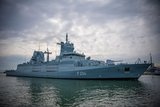
The Baltic Sea trials for torpedo defence studies were conducted on a WTD 71 multipurpose vessel. The trials included the full functional chain with torpedo detection, classification and localisation (TDCL) sonar, and the third generation SeaSpider prototype with its above water launcher.
During trials both an Mk37 torpedo-derived AUV and DM2A3 torpedoes served as threats which were detected and localised with passive and active TDCL. The attendant data was used to cue the SeaSpider launch. SeaSpider acquired the threats and homed in into closest point of approach (CPA). Successful intercept equivalent CPA was verified by acoustic and optical means.
With these trials, the full sensor-to-shooter functional chain of a hardkill surface ship torpedo defence system with TDCL and the SeaSpider ATT has been successfully demonstrated on a surface ship.

You may also like

More from Naval Warfare
-
![Australian industry programme builds pipeline for Virginia-class sustainment]()
Australian industry programme builds pipeline for Virginia-class sustainment
Australian businesses can now bid to support Virginia-class submarine sustainment in Western Australia, as momentum around the Henderson Defence Precinct also builds.
-
![South Korea, Japan and Turkey vie for US shipbuilding access in future frigate contest]()
South Korea, Japan and Turkey vie for US shipbuilding access in future frigate contest
Washington’s search for a foreign-built frigate could hand South Korea, Japan and Turkey a larger prize than a double-hull order: a foothold inside the US shipbuilding industrial base.
-
![Japan’s FY2027 budget bets on stand-off systems to offset demographic decline]()
Japan’s FY2027 budget bets on stand-off systems to offset demographic decline
Japan’s FY2027 defence budget backs stand-off strike, a 17-aircraft MQ-9B buy and a declared bid to lead the world in uncrewed maritime assets, alongside new frigates, submarines and support ships.
-
![Russia’s uncrewed boat portfolio hints at future naval demand]()
Russia’s uncrewed boat portfolio hints at future naval demand
Ukrainian intelligence has catalogued more than 20 Russian uncrewed surface vessels, revealing a portfolio weighted towards mine warfare and logistics, with implications for Western naval investment.
-
![Ukraine’s new long-range 12m autonomous vessel can deploy other drones]()
Ukraine’s new long-range 12m autonomous vessel can deploy other drones
Ukraine’s UForce unveiled the MV11 uncrewed surface vessel, designed to launch and support other naval drones at sea, fuelling debate over the future of autonomous maritime task groups.