SEA teams up with Terma for international countermeasures sales
Illustrative image of how C-Guard Mk II with Ancilia works. (Image: SEA)
International teaming has bought trainable anti-electronic warfare technology to a global market.


In March 2024, SEA signed a £170 million (US$218 million) deal with the UK’s Ministry of Defence for the use of its Ancilia electronic warfare countermeasures solution on modern Type 26 and Type 31 frigates, and on the UK’s Type 45 destroyers.
The company used its presence at Euronaval in Paris this week to announce it would now sell Ancilia internationally, following a strategic teaming agreement with Terma, a company with a similar place in the broader international market.
Terma already had a countermeasures product in the international market that was well-known – C-Guard. That will now be augmented with Ancilia and
Our news & analysis is now part of Defence Insight®
A Basic-level or higher Defence Insight subscription is now required to view this content.

More from Naval Warfare
-
![A400M trial demonstrates airborne deployment of uncrewed surface vessel]()
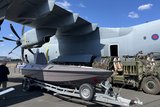
A400M trial demonstrates airborne deployment of uncrewed surface vessel
Kraken Technology Group’s A400M airdrop of a K3 Scout uncrewed surface vessel points to a new way for navies to insert USVs into contested waters, bypassing ports and motherships.
-
![How the Belgium-Netherlands MCM programme is reshaping naval mine warfare]()
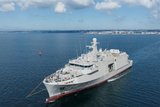
How the Belgium-Netherlands MCM programme is reshaping naval mine warfare
As the Belgian-Dutch replacement mine countermeasure programme progresses, it is becoming clear that motherships will be integral to future MCM operations. Seven years on from the programme’s inception, the impact of its forward-looking approach can be seen through the procurement strategies of its Western allies today.
-
![Naval primes dive into an underwater acquisition gold rush]()
Naval primes dive into an underwater acquisition gold rush
A cluster of acquisitions by Fincantieri, Thales, Lockheed Martin and Rheinmetall points to a race to secure underwater warfare, autonomy and sensing capability.