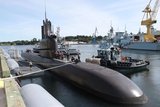
Safran to support RAN systems
Safran Electronics & Defense Australasia (SEDA) has received a contract from the Australian government for in-service support of the Royal Australian Navy’s (RAN’s) infrared search and track systems.
Under the contract, SEDA will provide maintenance and support services to the RAN for five years, with options to extend for up to 15 years.
Christopher Pyne, Australia’s Minister for Defence, said: ‘The new contract will extend the company’s Australian footprint and support local employment with the addition of seven fulltime employees.
‘This will lead to a significant reduction in repair timeframes as significant sub-components will no longer need to be returned to France for overhaul and repair.’
SEDA plans to analyse local supply chain options to increase Australian industry capability.



You may also like
More from Naval Warfare
-
![The UK joins the movement towards joint procurement]()
The UK joins the movement towards joint procurement
The UK will spend an estimated US$3.89 billion over the next decade in joint naval programmes, a lot of which will be in cooperation with Norway.
-
![Rheinmetall’s GMF 140: Ambitious frigate or market misfit?]()
Rheinmetall’s GMF 140: Ambitious frigate or market misfit?
Rheinmetall has unveiled its first next-generation frigate design, showing ambitions to compete as a surface combatant prime contractor. While the company is targeting North America, analysts believe the concept may be better positioned for future European programmes.
-
![US Navy $76.6bn award provides stability for submarine production]()
US Navy $76.6bn award provides stability for submarine production
The US Department of War’s US$76.6 billion Columbia-and Virginia-class submarine contract gives industry demand certainty as Washington seeks to rebuild its shipbuilding base.
-
![Dreadnought Phase 4 opens £2.5 billion supply chain opportunity]()
Dreadnought Phase 4 opens £2.5 billion supply chain opportunity
The UK government’s £8.4 billion Dreadnought Phase 4 investment sets aside £2.5 billion for the wider submarine supply chain, opening new work beyond BAE Systems’ prime contract.
-
![Hanwha Ocean deepens US ties and eyes Saudi submarine prospect after Canada setback]()
Hanwha Ocean deepens US ties and eyes Saudi submarine prospect after Canada setback
Hanwha Ocean is deepening ties with the US and eyeing a submarine opportunity in Saudi Arabia, as South Korea looks to convert its Canadian defeat into export momentum.