Saab unveils Autonomous Ocean Core at Euronaval
The Autonomous Ocean Core control panel at Euronaval 2024, which allowed the live control of a vessel 1,800km away. (Photo: author)
The software solution could offer a new, autonomous intelligence-gathering life to older small vessels.


Saab has used Euronaval 2024 in Paris to launch its new software product for uncrewed missions on surface and underwater vessels.
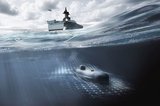
Autonomous Ocean Core is a vessel-agnostic autonomous control system which Saab hopes will become a foundation for future naval intelligence missions, keeping operators safely out of conflict zones while maintaining an intelligence presence in waters of interest or conflict.
Rather than going the expected route of building a naval drone from scratch like competitors Naval Group, Saab has chosen to develop a technology that, within limits, could theoretically turn any vessel into a naval drone. At launch, the
Our news & analysis is now part of Defence Insight®
A Basic-level or higher Defence Insight subscription is now required to view this content.

More from Naval Warfare
-
![China’s mineral processing dominance exposes naval supply chain vulnerabilities]()
China’s mineral processing dominance exposes naval supply chain vulnerabilities
Competition for critical minerals, and China’s dominance of their processing, is emerging as a decisive factor in future naval procurement programmes.
-
![Suppliers await next step in Australia’s mine warfare transition]()
Suppliers await next step in Australia’s mine warfare transition
Australia’s mine countermeasure capability remains in flux as the Huon-class nears retirement, but accelerated investment in autonomous systems is opening a path for industry.
-
![Can the US Navy ask Indo-Pacific allies to do more while training with them less?]()
Can the US Navy ask Indo-Pacific allies to do more while training with them less?
As the Iran War draws US ships and marine corps units away from the Indo-Pacific, curtailed exercises and a temporary carrier gap are exposing tensions between Washington’s demand for more self-reliant allies and the joint training needed to realise that ambition.
-
![How could Rheinmetall’s GMF 140 fit with ongoing programmes in North America?]()
How could Rheinmetall’s GMF 140 fit with ongoing programmes in North America?
With Canada committed to its River-class replacement and the USN pursuing a lower-cost frigate, Rheinmetall will need to demonstrate where the GMF 140 can fill a capability gap in the North American fleet.