Seoul’s SSN programme launch raises questions on fuel, tech and build location
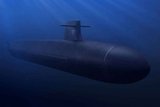
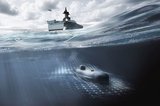
Artistic rendering of the future nuclear-powered submarine under South Korea’s Jangbogo-N Project. (Photo: Republic of Korea Ministry of National Defense official X account)
Seoul has unveiled its “Jangbogo-N Project” to develop domestically built, nuclear-propelled attack submarines in close coordination with Washington, marking an escalation of the Republic of Korea’s deterrence posture against Pyongyang’s undersea nuclear capabilities.


South Korea formally announced its intent to develop nuclear-propelled submarines on 26 May, releasing the “Basic Plan for the Development of Nuclear-Powered Submarines in the Republic of Korea” – the first document of its kind to lay out a roadmap for Seoul to enter an exclusive club of nations operating nuclear-propelled submarine fleets.
The Republic of Korea (ROK) Ministry of National Defense (MND) framed the initiative, branded the Jangbogo-N Project, as a direct response to the Democratic People’s Republic of Korea’s (DPRK) advancing submarine-based nuclear and missile capabilities.
The rationale for the programme is rooted in a deteriorating undersea threat
Our news & analysis is now part of Defence Insight®
A Basic-level or higher Defence Insight subscription is now required to view this content.

More from Naval Warfare
-
![Competitive P17B tender marks a shift in Indian Navy frigate procurement]()
Competitive P17B tender marks a shift in Indian Navy frigate procurement
The Indian Navy's P17B programme is expected to combine greater weapons capacity with a competitive domestic construction model, although key systems could remain dependent on international supply chains.
-
![Suppliers await next step in Australia’s mine warfare transition]()
Suppliers await next step in Australia’s mine warfare transition
Australia’s mine countermeasure capability remains in flux as the Huon-class nears retirement, but accelerated investment in autonomous systems is opening a path for industry.
-
![Can the US Navy ask Indo-Pacific allies to do more while training with them less?]()
Can the US Navy ask Indo-Pacific allies to do more while training with them less?
As the Iran War draws US ships and marine corps units away from the Indo-Pacific, curtailed exercises and a temporary carrier gap are exposing tensions between Washington’s demand for more self-reliant allies and the joint training needed to realise that ambition.