Royal Canadian Navy will start operating class 2 UAVs in 2028
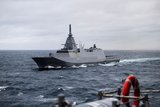
Royal Canadian Navy Halifax-class frigate Calgary. (Photo: DVIDS)
Acquired under Canada’s Department of National Defence ISTAR UAS project, the drones will be deployed from the Halifax-class frigates.


The Royal Canadian Navy (RCN) will operate class 2 uncrewed aerial vehicles (UAVs) for the first time in 2028. The drones will equip Halifax-class frigates in order to increase their over-the-horizon situational awareness and lethality against emerging naval and aerial threats in the country’s waters and overseas.
The UAVs will be provided by the Toronto-headquartered company MDA Space. Last week, the Canadian Department of National Defence (DND) awarded the vendor two contracts worth more than CAD$66 million ($47.6 million).
The agreements cover the initial supply of the two systems and five years of support. The deals, though, can be extended up
Our news & analysis is now part of Defence Insight®
A Basic-level or higher Defence Insight subscription is now required to view this content.


More from Naval Warfare
-
![Australian industry programme builds pipeline for Virginia-class sustainment]()
Australian industry programme builds pipeline for Virginia-class sustainment
Australian businesses can now bid to support Virginia-class submarine sustainment in Western Australia, as momentum around the Henderson Defence Precinct also builds.
-
![South Korea, Japan and Turkey vie for US shipbuilding access in future frigate contest]()
South Korea, Japan and Turkey vie for US shipbuilding access in future frigate contest
Washington’s search for a foreign-built frigate could hand South Korea, Japan and Turkey a larger prize than a double-hull order: a foothold inside the US shipbuilding industrial base.
-
![German Navy’s Israeli missile test points to deepening defence-industrial ties]()
German Navy’s Israeli missile test points to deepening defence-industrial ties
The test-firing of an Israel Aerospace Industries LORA ballistic missile from a German vessel highlights the Bundeswehr’s focus on speed to capability as it trials Israel’s operationally proven technology.