Thinning Arctic ice reveals naval capability gaps and new opportunities
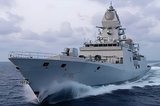
The Virginia-class fast-attack submarine USS Delaware (SSN 791) is one of the US Navy’s vessels that can operate in Arctic conditions. (Photo: Defense Visual Information Distribution Service)
As sea ice extent hits a record low and geopolitical tensions increase in the High North, navies are contending to adopt the technologies needed to operate beneath an increasingly unpredictable Arctic Ocean.


The Arctic is no longer a frozen frontier of secondary concern. Record-low ice extents, intensifying Russian naval activity and growing allied interest in under-ice deterrence have converged to make subsea operations in the High North a capability challenge.
At UDT 2026 in London, Eisha Home, senior marine engineer at BMT, a UK-headquartered maritime design, engineering and risk management consultancy, laid out the scale of the challenge.
Speaking during a session, Home outlined the environmental and technological barriers that must be overcome if allied submarines are to maintain deterrence in the region.
Related Articles
High tension in the High North – a wake-up call for NATO’s future Arctic defence efforts?
UK ‘Hybrid Navy’ steps up as Norway cooperation reinforces Arctic strategy
US Coast Guard’s Arctic Security Cutter ramp-up signifies turning point in Polar operations
A changing environment, an unchanged imperative
NASA’s Scientific Visualization Studio confirmed that the 2026 Arctic sea ice maximum was 1,360,000km² below the 1981–2010 average, continuing a long-term downward trend. The US National Oceanic and Atmospheric Administration separately made the point in its 2025 Arctic Report Card, noting that changing sea ice extent and thickness is “allowing increased marine traffic and prompting reevaluations of national security concerns”.
Thinning ice might suggest easier access, but the operational reality is more complex. Home explained at UDT 2026 that reduced ice cover is altering ocean salinity and water temperatures, disrupting the acoustic environment and removing sea ice’s natural dampening effect on ambient noise.
To double down on the complexity of operations, Russia has made no secret of its priorities. As Home noted, Moscow has identified the protection of its national interests in the Arctic as a top priority within both its foreign policy and military doctrine.
The Norwegian Ministry of Defence has been similarly direct, stating that “Russia’s (activities demonstrate) ongoing efforts to develop capabilities for mapping – and potentially sabotaging – Western critical infrastructure at significant depths” in response to allied military operations monitoring Russia in the High North observing undersea cables crucial to the UK.
Against that background, allied under-ice capability gaps are difficult to ignore. Home told UDT 2026 that the UK Royal Navy (RN) has not conducted an ICE-X exercise in eight years. Both the US and Russia retain demonstrated under-ice submarine capability, while Canada is actively pursuing it.
Norway and Canada’s constraints
The Royal Norwegian Navy (RNoN) provided further context for the operational realities of Arctic submarine operations. Speaking to Shephard, a RNoN spokesperson confirmed that “operating in ice-affected waters is a natural part of the operating environment rather than a niche capability” for Norway’s submarine force.
The need to recharge batteries using diesel engines, the RNoN official acknowledged, “limits their ability to remain under the ice for extended periods”. Under-ice communications were described as a “recognised challenge” that places constraints on sustained operations.
The RNoN spokesperson emphasised the importance of allied cooperation, telling Shephard: “It is therefore important that Norway, together with its allies, leverages the complementary strengths of different submarine capabilities to ensure that ice-covered areas are included in operations.”
On the technology front, the RNoN stressed that “in a competitive environment against capable adversaries, access to the latest available technology is a key factor”. The representative added: “Maintaining a competitive edge requires looking beyond the immediate situation and ensuring that platforms are continuously able to integrate and benefit from technological upgrades.”

Canada is moving to close its own capability gap. Speaking to Shephard, a Royal Canadian Navy (RCN) spokesperson confirmed that the RCN “requires a new submarine fleet that will be under-ice capable, deployable in the Arctic, with extended range and endurance that will provide stealth, persistence and lethality as key capabilities”.
The future Canadian Patrol Submarine (CPS) will employ “a unique combination of these attributes to ensure that Canada can detect, track, deter and, if necessary, defeat adversaries in all three of Canada’s oceans”, the RCN official told Shephard.
Two qualified suppliers have been identified for the Canadian Patrol Submarine Project (CPSP): ThyssenKrupp Marine Systems (TKMS), with the support of Germany and Norway; and South Korean shipbuilder Hanwha Ocean, with the support of South Korea.
Canada expects to announce a decision on the selection of the preferred supplier for contract negotiations later this year.
Navigation without satellites
Among the challenges of under-ice operations is navigation. Home explained at UDT 2026 that traditional inertial navigation systems cannot function reliably beneath the ice as satellite signals are unable to penetrate, with convergence errors near the magnetic poles compounding the problem.
Home identified quantum-enabled inertial navigation as one of the most promising solutions. Quantum sensors can determine precise positioning without reliance on satellite signals, reducing the need for frequent calibration and errors.
“By being able to do this, we can know exactly where we are under the ice and be able to stay under the ice without being detected,” Home told the audience at the conference.
The RN has already taken a step. In 2025, a quantum clock was successfully trialled aboard a submarine in partnership with Infleqtion, a US quantum technology company. The trial represented “a first critical step towards understanding how quantum clocks can be deployed on underwater platforms to enable precision navigation”, according to Infleqtion.
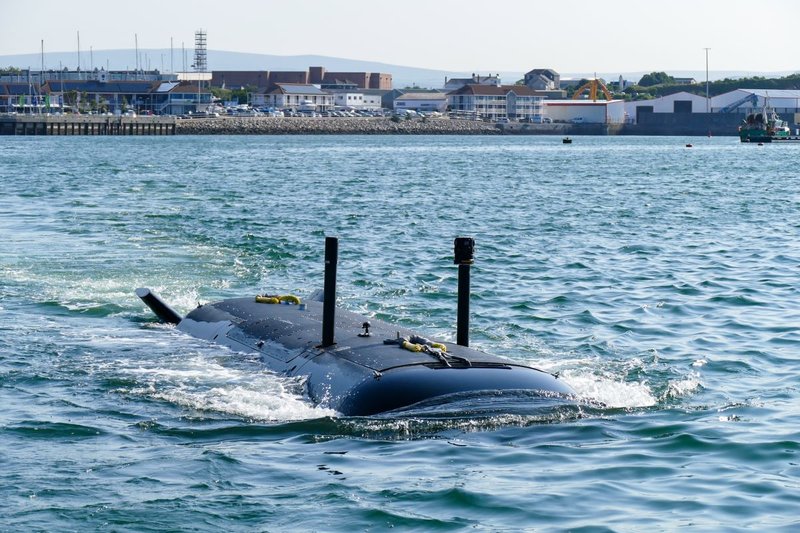
Home noted at UDT 2026 that quantum navigation benefits are not limited to nuclear submarines. “There is no reason that those benefits that we can see from quantum navigation can’t be seen on a diesel submarine or a nuclear submarine,” she said during the question-and-answer session.
Materials, coatings and communications
Beyond navigation, Home addressed the material science challenges unique to Arctic operations. Biofouling, extreme temperatures and ice abrasion all place demands on hull coatings. Tributyltin (TBT), once the most effective anti-fouling coating available, has been banned by the International Maritime Organisation (IMO) due to its environmental impact.
Research is instead focusing on nanomaterial-enhanced polydimethylsiloxane (PDMS), a silicone polymer with strong anti-fouling and anti-abrasion properties. Home explained that PDMS coatings are highly susceptible to mechanical damage. Emerging research into nanoparticle-based self-repairing coatings offers a potential path forward.
Under-ice communications remains a barrier to sustained Arctic submarine operations. Home told UDT 2026 delegates that Norwegian research institutes have explored the use of radio waves for under-ice communication, achieving transmission distances of approximately 100km at mid-range frequencies. Home noted that these results were limited to near-surface depths, falling short of the operational requirements for deep-water submarine operations.
Thinning ice reduces acoustic scattering loss to a degree, but that benefit is offset by the loss of ice’s noise-dampening effect, which has increased ambient noise levels across the Arctic Ocean, Home explained.
The Arctic is becoming more accessible. Reduced ice coverage is not reducing the requirement for under-ice capability – it is reshaping the operational environment in ways that demand new technologies and renewed investment.
Home concluded at UDT 2026: “We need to look at opportunities to develop technologies that can be built either into existing platforms or introduced as novel technologies on platforms that are being built now.”
The ice may be thinning, but the requirement beneath is only growing.
Related Programmes in Defence Insight


More from Naval Warfare
-
![Competitive P17B tender marks a shift in Indian Navy frigate procurement]()
Competitive P17B tender marks a shift in Indian Navy frigate procurement
The Indian Navy's P17B programme is expected to combine greater weapons capacity with a competitive domestic construction model, although key systems could remain dependent on international supply chains.
-
![China’s mineral processing dominance exposes naval supply chain vulnerabilities]()
China’s mineral processing dominance exposes naval supply chain vulnerabilities
Competition for critical minerals, and China’s dominance of their processing, is emerging as a decisive factor in future naval procurement programmes.
-
![Suppliers await next step in Australia’s mine warfare transition]()
Suppliers await next step in Australia’s mine warfare transition
Australia’s mine countermeasure capability remains in flux as the Huon-class nears retirement, but accelerated investment in autonomous systems is opening a path for industry.
-
![Can the US Navy ask Indo-Pacific allies to do more while training with them less?]()
Can the US Navy ask Indo-Pacific allies to do more while training with them less?
As the Iran War draws US ships and marine corps units away from the Indo-Pacific, curtailed exercises and a temporary carrier gap are exposing tensions between Washington’s demand for more self-reliant allies and the joint training needed to realise that ambition.