Reshef steps closer to production
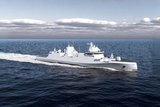
Rendering of Israel Shipyards’ S-72 design. (Photo: Israel Shipyards.)
An agreement on the Reshef-class detailed design phase brings the ship one step closer to production.


Israel Shipyards, on 26 August, announced it had signed an agreement with the Israeli Navy for the detailed design phase for the Reshef-class vessel.
The agreement marks the final step before a future production phase and will see Israel Shipyards present an engineering plan adapted to meet Israeli Navy requirements.
Israel Shipyards CEO Eitan Zucker said: ‘We are excited and proud to have reached this advanced stage in the development of the new ship, which will very soon assist in carrying out the missions and meeting the challenges faced by the Israeli Navy in protecting the country’s maritime borders.‘
The Reshef-class, based on the company’s S-72 design, will replace Israel’s Sa’ar 4.5 vessels which have been in service for over three decades.
Israel Shipyards said all combat systems onboard the Reshef-class would be sourced from Israel’s defence industry.
Related Programmes in Defence Insight

More from Naval Warfare
-
![The UK joins the movement towards joint procurement]()
The UK joins the movement towards joint procurement
The UK will spend an estimated US$3.89 billion over the next decade in joint naval programmes, a lot of which will be in cooperation with Norway.
-
![Rheinmetall’s GMF 140: Ambitious frigate or market misfit?]()
Rheinmetall’s GMF 140: Ambitious frigate or market misfit?
Rheinmetall has unveiled its first next-generation frigate design, showing ambitions to compete as a surface combatant prime contractor. While the company is targeting North America, analysts believe the concept may be better positioned for future European programmes.
-
![US Navy $76.6bn award provides stability for submarine production]()
US Navy $76.6bn award provides stability for submarine production
The US Department of War’s US$76.6 billion Columbia-and Virginia-class submarine contract gives industry demand certainty as Washington seeks to rebuild its shipbuilding base.
-
![US Navy begins SPY-6(V)4 radar testing ahead of first Arleigh Burke destroyer backfit]()
US Navy begins SPY-6(V)4 radar testing ahead of first Arleigh Burke destroyer backfit
Wallops Island trials will validate the next-generation radar's combat system integration before its installation aboard USS Pinckney, the first Flight IIA destroyer to receive the SPY-6(V)4 upgrade.
-
![Hanwha Ocean deepens US ties and eyes Saudi submarine prospect after Canada setback]()
Hanwha Ocean deepens US ties and eyes Saudi submarine prospect after Canada setback
Hanwha Ocean is deepening ties with the US and eyeing a submarine opportunity in Saudi Arabia, as South Korea looks to convert its Canadian defeat into export momentum.