Raytheon details US Navy Tomahawk order


Raytheon will supply 114 Tomahawk Block IV All Up Round missiles for the US Navy under a $122 million contract modification announced by the company on 10 March.
The contract completes the navy’s planned purchase of 214 Tomahawk Block IV missiles for fiscal year 2015 and continues to build the inventory to support ongoing warfighting requirements. Work on the contract is expected to be complete by August 2017.
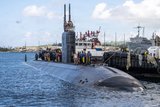
Tomahawk Block IV missile is a surface and submarine-launched precision strike stand-off weapon with a range of more than 1,000 miles. The missile is designed for long-range precision strike missions against high-value and heavily defended targets.
Dave Adams, Tomahawk senior program director, Raytheon, said: ‘Employed in every recent conflict, submarine and surface-launched Tomahawk missiles continue to be our nation’s weapon of choice to defeat high value threats. Raytheon continues an acute focus on maintaining affordability and enhancing the impressive capabilities of this sophisticated weapon system.’
Raytheon and the US Navy are working to provide Tomahawk with even greater capability to add a multi-effects warhead system and multi-mode seeker to engage moving targets on land and at sea.



More from Naval Warfare
-
![How France’s SNLE 3G programme is reshaping the naval nuclear industrial base]()
How France’s SNLE 3G programme is reshaping the naval nuclear industrial base
Extending far beyond a four-submarine replacement programme, France’s ballistic missile submarine effort is a decades-long industrial effort designed to preserve the country’s ability to build and sustain nuclear-powered strategic platforms.
-
![Suppliers await next step in Australia’s mine warfare transition]()
Suppliers await next step in Australia’s mine warfare transition
Australia’s mine countermeasure capability remains in flux as the Huon-class nears retirement, but accelerated investment in autonomous systems is opening a path for industry.
-
![Can the US Navy ask Indo-Pacific allies to do more while training with them less?]()
Can the US Navy ask Indo-Pacific allies to do more while training with them less?
As the Iran War draws US ships and marine corps units away from the Indo-Pacific, curtailed exercises and a temporary carrier gap are exposing tensions between Washington’s demand for more self-reliant allies and the joint training needed to realise that ambition.
-
![How could Rheinmetall’s GMF 140 fit with ongoing programmes in North America?]()
How could Rheinmetall’s GMF 140 fit with ongoing programmes in North America?
With Canada committed to its River-class replacement and the USN pursuing a lower-cost frigate, Rheinmetall will need to demonstrate where the GMF 140 can fill a capability gap in the North American fleet.