BAE Systems commits to Aussie steel


BAE Systems Australia will source steel from two Australian companies should it be successful in its bid for the Royal Australian Navy’s SEA 5000 programme.
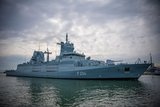
The company is competing to build nine Future Frigates as part of the programme. Its proposal is based on a variant of the Type 26 vessel, which it calls the Global Combat Ship-Australia.
In order to construct the vessels, BAE Systems will partner with BlueScope and Liberty OneSteel for the supply of more than 48,000 tonnes of Australian steel.
BlueScope will potentially supply plate steel that will be manufactured at its facility in Port Kembla, NSW.
Liberty OneSteel will provide structural steel sections for the frigates from its Whyalla facility. It will also deliver products for 4,000 tonnes of structural steel for the shipbuilding infrastructure, which includes cradles and other fixtures. Liberty OneSteel will also have the opportunity to offer value added processing, fabrication and welding in the Whyalla supply chain.
BAE Systems Australia chief executive, Gabby Costigan, said: ‘For SEA 5000 we are committed to building the Future Frigates in Australia using Australian suppliers at every opportunity. This includes maximising the
use of Australian steel on the programme. We are proud to support the Australian steel industry throughout our business and will grow that support if we are successful on SEA 5000.’

You may also like


More from Naval Warfare
-
![Russia’s uncrewed boat portfolio hints at future naval demand]()
Russia’s uncrewed boat portfolio hints at future naval demand
Ukrainian intelligence has catalogued more than 20 Russian uncrewed surface vessels, revealing a portfolio weighted towards mine warfare and logistics, with implications for Western naval investment.
-
![Ukraine’s new long-range 12m autonomous vessel can deploy other drones]()
Ukraine’s new long-range 12m autonomous vessel can deploy other drones
Ukraine’s UForce unveiled the MV11 uncrewed surface vessel, designed to launch and support other naval drones at sea, fuelling debate over the future of autonomous maritime task groups.
-
![German Navy’s Israeli missile test points to deepening defence-industrial ties]()
German Navy’s Israeli missile test points to deepening defence-industrial ties
The test-firing of an Israel Aerospace Industries LORA ballistic missile from a German vessel highlights the Bundeswehr’s focus on speed to capability as it trials Israel’s operationally proven technology.
-
![Global submarine suppliers compete for a rapidly shrinking market]()
Global submarine suppliers compete for a rapidly shrinking market
Diminishing submarine competitions worldwide are leaving fewer acquisition opportunities, pushing contractors toward alternatives.