RAN signs lease extension for Cape-class patrol boats


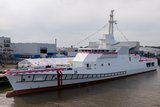
The Royal Australian Navy (RAN) has signed a two-year lease extension with the National Australia Bank for its two Cape-class patrol boats (CCPB), Cape Fourcroy and Cape Inscription.
Manufacturer Austal said that the lease extends the charter from the initial three-year minimum term to five years, adding that the company is also providing ongoing in-service support and sustainment for the vessels.
The charter and sustainment of Cape Fourcroy has been extended until April 2022, and Cape Inscription to May 2022.
The contract extension has reduced the total residual value for the two vessels from A$42 million to circa $24.3 million, so related debt on the balance sheet for CCPB 9 and 10 has become non-current again, and will progressively reduce from minus A$48.8 million as of 30 June 2019 to minus A$24.3 million in late FY2022 at the maturity of the extended contract period.
Austal’s CCPB is a 58m aluminium monohulled vessel, designed to perform border protection and maritime security tasks, with a top speed of 26kt and a range of up to 4,000nm.
It has a crew of 22, and is capable of undertaking 28-day patrols in up to sea state 4, as well as having the ability to launch two boats simultaneously.
‘This proven capability has also attracted attention from a number of export markets, including the Trinidad and Tobago coast guard, which recently contracted Austal to deliver two of the vessels,’ David Singleton, CEO of Austal, said.
‘The lease extension also includes a sustainment package – to be delivered by Austal and delivering revenue to Austal – to ensure vessels are available to meet the operational demands placed upon them.’
Related Equipment in Defence Insight


More from Naval Warfare
-
![AUKUS heavyweight torpedo test raises questions over future armed UUV requirements]()
AUKUS heavyweight torpedo test raises questions over future armed UUV requirements
A heavyweight torpedo firing from the Royal Navy’s uncrewed submarine XV Excalibur suggests a shift beyond surveillance, with allied navies eyeing strike roles for large autonomous undersea vessels.
-
![Industrial teams prepare roadmap for Indonesia aircraft carrier transformation]()
Industrial teams prepare roadmap for Indonesia aircraft carrier transformation
Fincantieri and PT PAL have agreed on a framework to modernise the former Giuseppe Garibaldi, with drones, communications and broader Italian–Indonesian industrial ties involved.
-
![Five years on: where could opportunities emerge next for AUKUS Pillar II?]()
Five years on: where could opportunities emerge next for AUKUS Pillar II?
Payload commonality, combat systems and electronic warfare are emerging as likely priorities as the trilateral partnership balances building submarines with sharing industrial ecosystems.