Trinidad & Tobago orders two Cape-class patrol boats


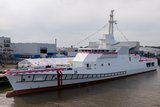
Austal has signed a contract worth some A$126 million to construct two Cape-class patrol boats (CCPB) for the Republic of Trinidad & Tobago, which will be delivered in the second half of 2020.
The award of the contract confirmed an important defence export opportunity for Austal and subsequent workflow for the company’s Henderson operations, David Singleton, CEO of the company, said.
‘It is important to acknowledge that the Royal Australian Navy (RAN) and the Australian government were instrumental in the success of this defence export programme,’ Singleton said.
‘The RAN, which operates two CCPBs, was an effective advocate of the CCPB capabilities, hosting a sea ride for the visiting Trinidad & Tobago chief of defence staff and engineering team to assess and experience the vessel’s capabilities.’
He added that the minister for trade, minister for foreign affairs, and minister for defence have all provided continuing support and assistance ensuring Commonwealth support was available for this programme, noting that the ‘whole of government advocacy in support of this defence export opportunity has been instrumental to its success’.
An announcement that Trinidad and Tobago was going to acquire the vessel was first announced by Austal on 30 July 2018, and an interim schedule protection agreement was signed and fees paid to Austal to facilitate commencement of construction and early procurement on the project whilst the contract arrangements were finalised.
Austal began construction with a metal cutting ceremony at the company’s Henderson shipyard on 8 April 2019, attended by Capt Douglas Archer representing the coast guard, and Australian defence export advocate David Johnston.
Austal originally designed and built ten CCPBs used by the RAN and Australian Border Force.
The 58m all-aluminium monohulled patrol boats were specifically designed and manufactured to combat the full range of maritime security threats, and the CCPB has a 4,000nm range and 28-day patrol cycle with a crew of up to 22 people.
It is also fitted with two high speed rigid hull inflatable boats for use in intercepting other vessels.
Trinidad and Tobago requested that the purchase be supported by a financing package through Export Finance Australia, and the government announced in December 2018 that the agency would be available to support this request.
Related Equipment in Defence Insight


More from Naval Warfare
-
![AUKUS heavyweight torpedo test raises questions over future armed UUV requirements]()
AUKUS heavyweight torpedo test raises questions over future armed UUV requirements
A heavyweight torpedo firing from the Royal Navy’s uncrewed submarine XV Excalibur suggests a shift beyond surveillance, with allied navies eyeing strike roles for large autonomous undersea vessels.
-
![Industrial teams prepare roadmap for Indonesia aircraft carrier transformation]()
Industrial teams prepare roadmap for Indonesia aircraft carrier transformation
Fincantieri and PT PAL have agreed on a framework to modernise the former Giuseppe Garibaldi, with drones, communications and broader Italian–Indonesian industrial ties involved.
-
![Five years on: where could opportunities emerge next for AUKUS Pillar II?]()
Five years on: where could opportunities emerge next for AUKUS Pillar II?
Payload commonality, combat systems and electronic warfare are emerging as likely priorities as the trilateral partnership balances building submarines with sharing industrial ecosystems.