RAN set for Nulka active missile decoy upgrade


The Royal Australian Navy’s (RAN’s) project to update the Nulka Active Missile Decoy launch capability is set to go ahead with the government granting First Pass approval for the work under project SEA 1397 Phase 5B. Around $45 million in funding for the initial work has also been approved.
Nulka is an anti ship missile defence system, jointly developed by Australia and the United States and manufactured by BAE Systems.
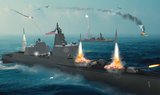
The system is a rocket propelled active decoy system designed to lure anti-ship missiles away from their intended target. It provides warships with a highly effective all-weather defence against anti-ship missiles, bringing together hovering rocket, autonomous system and electronic technologies.
Originally introduced into service in 1997, the existing fire control and launcher sub-systems have obsolescence and sustainment issues. Under this programme, the launch system will be updated with newer technology, enhancing the system’s effectiveness.
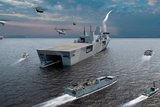
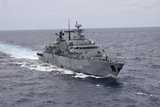
When finalised, the updated system will be installed into the RAN’s ANZAC Class Frigates and Hobart Class Destroyers. Work will also be undertaken to fit Nulka to the Canberra Class Amphibious Ships.
The government will now commence First to Second Pass activities, which include engineering design and risk reduction activities. According to the Australian Department of Defence, initial development of the updated launch system is proposed to be conducted by OEM BAE Systems Australia, however there may be opportunities for wider Australian industry involvement as the project progresses.
A decision on the final launch sub-system capability is expected in 2017, with the upgraded capability expected to be introduced into operational service from around 2020.


More from Naval Warfare
-
![US Navy’s $275 billion BBGN plan hinges on shipyard transformation]()
US Navy’s $275 billion BBGN plan hinges on shipyard transformation
The US Navy’s planned nuclear-powered warship carries a US$275 billion price tag, but the greater story lies in the industrial overhaul needed to build it, from AI-enabled design to digital twins and modular construction.
-
![RTX confirms US Marine Corps and US Navy acquire Hadalus UUV]()
RTX confirms US Marine Corps and US Navy acquire Hadalus UUV
RTX told Shephard that the Hadalus UUV has been procured by the US Marine Corps and the Office of Naval Research for operational experimentation as the company prepares additional demonstrations with the US Navy, NATO and AUKUS partners.
-
![The UK joins the movement towards joint procurement]()
The UK joins the movement towards joint procurement
The UK will spend an estimated US$3.89 billion over the next decade in joint naval programmes, a lot of which will be in cooperation with Norway.