Indonesian MCMVs make sweeping progress
Two new minehunters for Indonesia will be powered by MAN engines and an electric hybrid propulsion system.


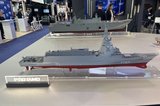
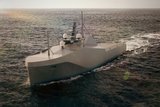
Two mine countermeasures vessels (MCMV) for the Indonesian Navy are being constructed in Lemwerder, Germany by the shipbuilder Abeking & Rasmussen.
A $204 million contract for the 62m-long ships was concluded in January 2019, and a steel-cutting ceremony was held on 26 November 2020. Featuring a non-magnetic steel hull, the MCMV design is based on the Frankenthal class operated by the German Navy.
Once commissioned, they will allow retirement of the navy’s two Pulau Rengat-class minehunters built in the Netherlands. These entered service in March 1988, so they are already long in the tooth.
In the mid-1990s, Indonesia also
Our news & analysis is now part of Defence Insight®
A Basic-level or higher Defence Insight subscription is now required to view this content.




More from Naval Warfare
-
![Navantia pitches 64-cell F110 frigate and sets out plans for 75m autonomous vessel]()
Navantia pitches 64-cell F110 frigate and sets out plans for 75m autonomous vessel
With its second F110 frigate launched four months early, the Spanish shipbuilder is courting allied navies with a missile-defence upgrade and a 75m uncrewed vessel.
-
![‘Now Europe is a market’: Fincantieri sees new opportunities closer to home]()
‘Now Europe is a market’: Fincantieri sees new opportunities closer to home
Fincantieri naval vessels chief Eugenio Santagata spoke to Shephard about opportunities and how they sit within a portfolio backed by a “strong backlog”, as Euronaval 2026 unfolded.
-
![Kongsberg Maritime and Thales UK team on Arctic Hunter Type 92 proposal]()
Kongsberg Maritime and Thales UK team on Arctic Hunter Type 92 proposal
The Norwegian company says a commercial hull, proven sonar and a British yard could deliver uncrewed submarine hunters by the end of the decade, but the Royal Navy has not yet set a requirement or timeline.
-
![US Navy weighs “Super Intelligence” role in designing a quieter SSN(X) attack submarine]()
US Navy weighs “Super Intelligence” role in designing a quieter SSN(X) attack submarine
NAVSEA is exploring AI-assisted design for a larger, stealthier submarine with increased weapons capacity and uncrewed-system integration, with lead-boat procurement envisaged from 2040.
-
![ST Engineering makes Euronaval debut with MRV European export campaign]()
ST Engineering makes Euronaval debut with MRV European export campaign
A six-ship home order, agreements with Saab, Naval Group and Babcock and spare yard capacity underpin the group’s first Euronaval bid for smaller European navies.