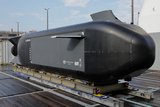
Australia to advance army amphibious assets
The Australian Army is using landing craft and amphibian vehicles that are 50 years old. The time has come to overhaul the fleet.


Australia has launched a quest, worth up to A$800 million ($611 million), to find new amphibious vehicles and landing craft ‘with enhanced speed and protection’ to equip its army.
The Army Littoral Manoeuvre - Light programme falls under Project Land 8710 Phase 1. Two new types of watercraft will provide shore-to-shore, ship-to-shore and over-the-shore capabilities in littoral and riverine environments.
Firstly, the Independent Landing Craft will replace existing LCM-8 vessels used by the Australian Army. Their detailed design, build, maintenance and support will all come from domestic sources.
Shephard previously reported that the army’s 15 LCM-8 landing craft, dating from the Vietnam War
Our news & analysis is now part of Defence Insight®
A Basic-level or higher Defence Insight subscription is now required to view this content.


More from Naval Warfare
-
![US turns to allies to tackle navy shipbuilding backlog]()
US turns to allies to tackle navy shipbuilding backlog
A White House memorandum acknowledges US Navy shipbuilding backlogs and a weakened industrial base, opening a formal path for South Korean and Japanese yards to help rebuild capacity.
-
![US Navy’s $275 billion BBGN plan hinges on shipyard transformation]()
US Navy’s $275 billion BBGN plan hinges on shipyard transformation
The US Navy’s planned nuclear-powered warship carries a US$275 billion price tag, but the greater story lies in the industrial overhaul needed to build it, from AI-enabled design to digital twins and modular construction.
-
![Industry sees opportunity in Australia’s shift to networked undersea warfare]()
Industry sees opportunity in Australia’s shift to networked undersea warfare
Australia’s new defence innovation strategy indicates a shift from platform-centric to network-centric undersea warfare, with Ocius and Anduril Industries pointing to fast-growing opportunities for local industry.