Poland signs $1.5 billion contract for coastal defence missiles
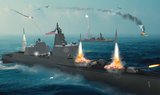
Poland has placed a third order for NSM CDS coastal defence missiles. (Photo: Kongsberg)
Kongsberg has been awarded a contract worth NOK16 billion ($1.49 billion) from the Polish Ministry of National Defence for delivery of four Naval Strike Missile (NSM) Coastal Defence System (CDS) squadrons.


Poland was the first nation to acquire the NSM CDS capability in 2008 and added an additional squadron in 2014. The new deliveries will carry on into the 2030s.
The CDS uses National Advanced Surface-to-Air Missile System (NASAMS) C2 with NSM control functionality. Polish industry will contribute to significant parts of the programme, including the communication system, vehicles and part of the C2 network, as well as taking part in system integration activities.
The NSM can be launched from both land- and sea-based platforms and is already in use by, or under delivery to, 12 countries. The NSM is a fifth-generation strike missile initially developed by Kongsberg for the Norwegian Navy.
Related Articles
Contract inked for Romanian Naval Strike Missile coastal defence system
The missile’s stealthy design makes it difficult to detect and its seeker system enables autonomous recognition of targets.
While not mentioning the war in Ukraine, Geir Håøy, president and CEO of Kongsberg, said: ‘With the changed security situation in Europe, Poland is firm in its commitment to ensure important defence capabilities and for Kongsberg as an industry partner, this ensures predictability to invest and continue to build capacity to deliver on these needs.’
The contract is dependent on approved export financing and this is expected to be finalised within a few weeks.
Related Equipment in Defence Insight



More from Naval Warfare
-
![US turns to allies to tackle navy shipbuilding backlog]()
US turns to allies to tackle navy shipbuilding backlog
A White House memorandum acknowledges US Navy shipbuilding backlogs and a weakened industrial base, opening a formal path for South Korean and Japanese yards to help rebuild capacity.
-
![US Navy’s $275 billion BBGN plan hinges on shipyard transformation]()
US Navy’s $275 billion BBGN plan hinges on shipyard transformation
The US Navy’s planned nuclear-powered warship carries a US$275 billion price tag, but the greater story lies in the industrial overhaul needed to build it, from AI-enabled design to digital twins and modular construction.
-
![Industry sees opportunity in Australia’s shift to networked undersea warfare]()
Industry sees opportunity in Australia’s shift to networked undersea warfare
Australia’s new defence innovation strategy indicates a shift from platform-centric to network-centric undersea warfare, with Ocius and Anduril Industries pointing to fast-growing opportunities for local industry.
-
![Asia-Pacific emerges as the largest export market for US-made USVs]()
Asia-Pacific emerges as the largest export market for US-made USVs
Asian customers have placed one of the largest known international purchases of US-built uncrewed surface vessels, highlighting accelerating regional demand for autonomous maritime capabilities and distributed naval operations.