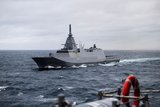
PAE wins maritime surveillance contract
PAE will deliver command, control, communications, and surveillance capabilities to the Tunisian Navy for maritime surveillance under a contract announced on 12 December.
The equipment will deliver an integrated common operating picture to help the government of Tunisia secure its territorial waters. The contract is part of the US Navy Regional Maritime Awareness Capability (RMAC) programme, which provides host nations with increased maritime domain awareness through improved integration of interagency and international partners.
The project integrates multiple maritime sensors into a common operating picture. The resulting system fully integrates and correlates multiple data sources and displays them to allow for more effective tracking of vessels. With this solution, the Tunisian Navy will be able to more efficiently track and respond to immediate maritime threats or incidents.
Kenneth Myers, president of PAE’s national security solutions business unit, said: ‘PAE has over 60 years of supporting the execution of complex and critical missions by providing technical services and national security solutions while exceeding the end user requirements for performance and sustainability.
‘PAE will survey, design, install, and test the capability as well as provide the training and transition to the host nation as part of the contract. This programme will assist a key US ally in securing its border and maintaining peace and stability in the region.’



You may also like
More from Naval Warfare
-
![China’s mineral processing dominance exposes naval supply chain vulnerabilities]()
China’s mineral processing dominance exposes naval supply chain vulnerabilities
Competition for critical minerals, and China’s dominance of their processing, is emerging as a decisive factor in future naval procurement programmes.
-
![Suppliers await next step in Australia’s mine warfare transition]()
Suppliers await next step in Australia’s mine warfare transition
Australia’s mine countermeasure capability remains in flux as the Huon-class nears retirement, but accelerated investment in autonomous systems is opening a path for industry.
-
![Can the US Navy ask Indo-Pacific allies to do more while training with them less?]()
Can the US Navy ask Indo-Pacific allies to do more while training with them less?
As the Iran War draws US ships and marine corps units away from the Indo-Pacific, curtailed exercises and a temporary carrier gap are exposing tensions between Washington’s demand for more self-reliant allies and the joint training needed to realise that ambition.
-
![How could Rheinmetall’s GMF 140 fit with ongoing programmes in North America?]()
How could Rheinmetall’s GMF 140 fit with ongoing programmes in North America?
With Canada committed to its River-class replacement and the USN pursuing a lower-cost frigate, Rheinmetall will need to demonstrate where the GMF 140 can fill a capability gap in the North American fleet.
-
![Australian industry programme builds pipeline for Virginia-class sustainment]()
Australian industry programme builds pipeline for Virginia-class sustainment
Australian businesses can now bid to support Virginia-class submarine sustainment in Western Australia, as momentum around the Henderson Defence Precinct also builds.
-
![South Korea, Japan and Turkey vie for US shipbuilding access in future frigate contest]()
South Korea, Japan and Turkey vie for US shipbuilding access in future frigate contest
Washington’s search for a foreign-built frigate could hand South Korea, Japan and Turkey a larger prize than a double-hull order: a foothold inside the US shipbuilding industrial base.