US Navy NSWC selects Sonardyne’s Ranger 2


Sonardyne’s underwater target tracking technology has been selected by the US Naval Surface Warfare Center (NSWC), Carderock Division for use at its South Florida Ocean Measurement Facility (SFOMF), the company announced on 18 September.
Carderock Division, Maryland, is the US Navy’s research, engineering, modelling and test centre for surface and undersea technologies. Carderock’s SFOMF provides a demanding open ocean test environment for subsea systems and UUVs in development for both the navy and wider maritime industry. Its main mission is to perform electromagnetic signature tests of navy assets, using multiple fixed, in-water electromagnetic and acoustic
measurement sites. The facility also tests and evaluates mine detection, countermeasures and mine response; performs acoustic measurements; and acquires radar cross section and infrared signatures.
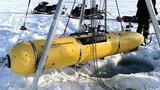
To support this work, Carderock has ordered Sonardyne’s high accuracy Ranger 2 Ultra Short Baseline (USBL) acoustic tracking system, with a GyroUSBL transceiver, Nano and Wideband Sub-Mini 6 Plus (WSM 6+) transponders.The Ranger 2 system will enable operators to track the precise underwater position of subsea systems and UUVs that come through the SFOMF for testing. The system offers the ability to track systems in shallow and deep water, near the surface and over very long ranges. With the Nano and WSM 6+ transponders, all sizes of vehicle can be accommodated, from man-portable models through to extra-large designs.


More from Naval Warfare
-
![Canada assesses security equipment changes for Polar Icebreaker Imnaryuaq]()
Canada assesses security equipment changes for Polar Icebreaker Imnaryuaq
The Canadian Department of National Defence is evaluating communications and reconnaissance changes for CCGS Imnaryuaq’s expanded maritime security role, while retaining its 2032 acceptance target.
-
![US Navy’s MQ-25 Stingray approaches carrier-integration tests]()
US Navy’s MQ-25 Stingray approaches carrier-integration tests
Boeing has outlined its upcoming precision-landing and carrier-airspace trials as MQ-25 manufacturing shifts towards Illinois, with initial Lot 1 deliveries expected in 2029.
-
![From Poland to the Pacific: can Miecznik become a blueprint for other navies?]()
From Poland to the Pacific: can Miecznik become a blueprint for other navies?
Babcock is taking its Polish industrial partnership approach to Denmark and New Zealand as navies seek sovereign shipbuilding skills alongside ships.
-
![Unsettled waters in the North: can navies still trust their Arctic acoustic maps?]()
Unsettled waters in the North: can navies still trust their Arctic acoustic maps?
The changing Arctic environment is creating new challenges for submarine detection, driving demand for distributed sensors, uncrewed underwater vehicles and real-time acoustic modelling.