


UK’s $1 billion AUKUS support request signals strong ongoing US collaboration
The latest foreign military sales request from the UK has implications for the future of the programme and collaboration between the three nations.


The US Naval Surface Warfare Center (NSWC) has developed a new prototype system, the MK29 Mixed Gas Rebreather, to support the navy’s diving community.
The technology will enhance the capabilities of navy divers and accelerate deployments for missions including underwater rescues, explosive ordnance disposal, ship hull maintenance, recovery of sunken equipment and salvage of vessels and aircraft.
Currently, the navy’s divers breathe a mixture of oxygen and nitrogen while on underwater missions but the nitrogen becomes toxic below 150ft. The new system solves this problem, by filtering used oxygen-helium through a carbon dioxide scrubber, which removes carbon dioxide and recycles the breathable gasses back to the diver.
Test results suggest this system can not only help divers perform more dives, but also stay underwater longer if surface supply gas is interrupted.
The MK29 also reduces breathing noise and fogging of helmet viewports. It also features 3D-printed titanium tubing that connects hoses from the helmet’s breathing manifold to the regulator backpack. That titanium reduces the risk of breathing hoses being sliced by sharp or jagged underwater objects.
Further research on the product will be carried out later in 2018.


The latest foreign military sales request from the UK has implications for the future of the programme and collaboration between the three nations.
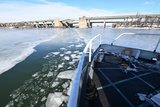
The USCG plans to award a contract this year for the construction of Homeland Security Cutters. The new vessels will replace the 60-plus-year-old fleet of Light Icebreaking Tugs.

The expansion of the Redstone facility in Alabama will enable Raytheon to increase production of Standard Missiles in the location by 50% and support Washington in refilling stockpiles after recent operations have depleted the Pentagon’s reserves.
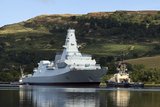
Major naval initiatives including the European Patrol Corvette programmes and Norway’s UK partnership-focused purchase of Type 26 frigates point to the growing interest in the advantages of commonality across allied navies.
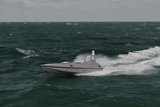
The UK Royal Navy’s rapid procurement of uncrewed platforms aligns with the force’s strategic shift towards a fleet better equipped to handle modern threats.
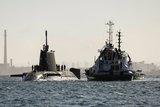
The Astute-class submarine’s visit to Australia was the first time maintenance activity on a UK Royal Navy nuclear submarine had been carried out in the country.

Connect with us on socials


