Norway and Germany secure Naval Strike Missiles
Kongsberg's Naval Strike Missile has been selected by Germany and Norway. (Photo: Kongsberg Defence & Aerospace)
Norway and Germany have jointly contracted Kongsberg to provide a naval combat system and Naval Strike Missiles.


Kongsberg Defence & Aerospace has been contracted by Norway and Germany to provide ORCCA combat system elements to the six new 212CD submarines, as well as the Naval Strike Missile (NSM) to the two nation’s navies.
The contract for NSM is a joint procurement by Norway and Germany valued at 4,404 MNOK.
Germany is the sixth nation to select NSM, while for Norway the contract will serve to replenish and update the current inventory.
The NSM has a stealth design and passive infrared imaging sensor making it difficult to detect, increasing its accuracy and avoiding collateral damage.
The NSM is multi-mission, sea and land targets, with a stand-off range of more than 100nmi.
Geir Håøy, CEO of Kongsberg, commented ‘The deliveries will last way into the 2030s and are an important and strategic milestone that strengthens our foothold in Europe’.
According to Shephard Defence Insight, the NSM is a long-range precision missile designed to strike heavily defended land and sea targets.
It is a successor to the Penguin anti-ship missile and is claimed to be the first fifth-generation long-range precision strike missile.
Related Equipment in Defence Insight

More from Naval Warfare
-
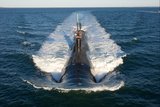
![US Navy $76.6bn award provides stability for submarine production]()
US Navy $76.6bn award provides stability for submarine production
The US Department of War’s US$76.6 billion Columbia-and Virginia-class submarine contract gives industry demand certainty as Washington seeks to rebuild its shipbuilding base.
-
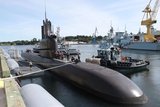
![Hanwha Ocean deepens US ties and eyes Saudi submarine prospect after Canada setback]()
Hanwha Ocean deepens US ties and eyes Saudi submarine prospect after Canada setback
Hanwha Ocean is deepening ties with the US and eyeing a submarine opportunity in Saudi Arabia, as South Korea looks to convert its Canadian defeat into export momentum.
-
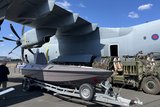
![A400M trial demonstrates airborne deployment of uncrewed surface vessel]()
A400M trial demonstrates airborne deployment of uncrewed surface vessel
Kraken Technology Group’s A400M airdrop of a K3 Scout uncrewed surface vessel points to a new way for navies to insert USVs into contested waters, bypassing ports and motherships.