NATO allies gather in Scotland for major naval exercises
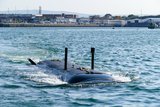
The UK vessels taking part in Exercise Strike Warrior are preparing for deployment next year. (Photo: Royal Navy/MoD/Crown Copyright)
Exercise Strike Warrior will run for two weeks, training navies in interoperability and combat techniques.


Naval vessels from several NATO allied nations have arrived in Scotland for Exercise Strike Warrior, a large-scale exercise running from 14–27 October.
The exercise, which includes a naval presence from Portugal, Belgium, Germany and the Netherlands alongside a substantial UK Royal Navy contingent, is a test of NATO forces’ interoperability and smooth working as a single overall unit.
The UK Carrier Strike Group, led by HMS Prince of Wales and including frigates, Royal Fleet Auxiliary tankers, helicopters, F-35B Lightning jets and an Astute-class submarine, is in attendance, and is using the exercise as training ahead of Carrier Strike Group deployment in 2025, the first such deployment in four years which will see the Group sent around the world.
Related Articles
Oman-led naval exercise with France, UK, US concludes
Each major vessel in the exercise will be testing out particular capabilities. While HMS Prince of Wales acts as naval command vessel, at least for the UK contingent, HMS Portland, a Type 23 frigate, will work on its skills as a submarine hunter, HMS Dauntless, a Type 45 destroyer, will focus on air defence (a role it recently played in the Red Sea), and each of the Carrier Strike Group vessels will work alongside vessels from Standing NATO Maritime Group 1 to collaborate and share manoeuvres at combat speed, to ensure their crews can work effectively together in the event of real-world necessity.
Commodore James Blackmore, commander of the UK Carrier Strike Group, said the exercise was important because it would validate both groups as a “Very High Readiness” force, which will mean they can be ready to command a fleet with just a few days’ notice.
Related Equipment in Defence Insight


More from Naval Warfare
-
![From the Baltic to the Gulf: where USV procurement is heading next]()
From the Baltic to the Gulf: where USV procurement is heading next
Saildrone’s new Copenhagen base is one sign of a larger shift, as navies globally turn to uncrewed vessels for surveillance and mine clearance.
-
![Israeli Navy looks to expand as war reshapes future force requirements]()
Israeli Navy looks to expand as war reshapes future force requirements
Israel’s navy is preparing for a larger and more technically diverse role, but its ambitions could be impacted by supply chain restrictions, accelerating demand for domestic naval production as well as autonomous maritime capabilities.
-
![Quantum sensing gathers pace as navies eye undersea advantage]()
Quantum sensing gathers pace as navies eye undersea advantage
As AI dominates defence conversations, industry increasingly points to quantum sensing as the technology set to change submarine and uncrewed underwater vehicle operations.