Myanmar springs a surprise with second submarine
Newly commissioned Myanmar Navy vessels include two 18m riverine assault boats in the foreground, the submarine UMS Minye Kyaw Htin behind , the OPV UMS Inwa and, barely visible, four 20m riverine patrol boats. (Photo: C-in-C Defence Services, Myanmar)
The Myanmar Navy commissioned eight new vessels, including a second-hand submarine, in late December.


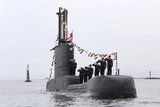
In a largely unexpected development, the Myanmar Navy commissioned its second submarine – a Chinese-origin Type 035 Ming class – as UMS Minye Kyaw Htin on its 74th Navy Day event on 24 December 2021.
Thailand-based Burmese media outlet The Irrawaddy reported that a secret deal was struck with the Chinese for the Ming boat’s supply. It came after a deal had been reached with India and Russia for transfer of the Indian Navy’s Project 877 EKM Kilo-class submarine INS Sindhuvir in 2019, and which was commissioned as UMS Minye Thein Kathu in December 2020.
As with
Our news & analysis is now part of Defence Insight®
A Basic-level or higher Defence Insight subscription is now required to view this content.

You may also like

More from Naval Warfare
-
![Russia’s uncrewed boat portfolio hints at future naval demand]()
Russia’s uncrewed boat portfolio hints at future naval demand
Ukrainian intelligence has catalogued more than 20 Russian uncrewed surface vessels, revealing a portfolio weighted towards mine warfare and logistics, with implications for Western naval investment.
-
![Ukraine’s new long-range 12m autonomous vessel can deploy other drones]()
Ukraine’s new long-range 12m autonomous vessel can deploy other drones
Ukraine’s UForce unveiled the MV11 uncrewed surface vessel, designed to launch and support other naval drones at sea, fuelling debate over the future of autonomous maritime task groups.
-
![Global submarine suppliers compete for a rapidly shrinking market]()
Global submarine suppliers compete for a rapidly shrinking market
Diminishing submarine competitions worldwide are leaving fewer acquisition opportunities, pushing contractors toward alternatives.
-
![Future frigate programme highlights broader RNZN replacement challenge]()
Future frigate programme highlights broader RNZN replacement challenge
New Zealand’s evaluation of the Mogami and Arrowhead 140 frigate designs reflects a wider push for alliance interoperability, and points to a larger recapitalisation of the Royal New Zealand Navy fleet beyond the current programme.