Military threats force through Australian frigate procurement
First steel for the frigate HMAS Hunter was cut at Osborne Naval Shipyard in Adelaide on 21 June. (Photo: BAE Systems)
Construction may have been started by BAE Systems on the first Hunter-class frigate but scepticism surrounds the general-purpose frigate programme due to delays and planning issues.


Australia has been forced into a kneejerk procurement of up to 11 general-purpose frigates to more rapidly counter intensifying military threats, primarily from China.
Last month, construction of the country’s new Hunter-class frigate started, with first steel cut in a ceremony taking place on 21 June at Osborne Naval Shipyard, Adelaide. The previous day, a production contract for the initial trio of frigates was signed.
Coming six years after BAE Systems Australia was selected for the Sea 5000 Future Frigate project, the shipbuilder noted that the steel cut on the new Hunter-class frigate formed part of the 8,200t frigate’s under-structure
Our news & analysis is now part of Defence Insight®
A Basic-level or higher Defence Insight subscription is now required to view this content.


More from Naval Warfare
-
![A400M trial demonstrates airborne deployment of uncrewed surface vessel]()
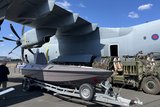
A400M trial demonstrates airborne deployment of uncrewed surface vessel
Kraken Technology Group’s A400M airdrop of a K3 Scout uncrewed surface vessel points to a new way for navies to insert USVs into contested waters, bypassing ports and motherships.
-
![Babcock onshores 85% of Canada’s submarine supply chain as it eyes future CPSP programme]()
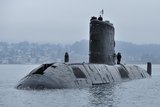
Babcock onshores 85% of Canada’s submarine supply chain as it eyes future CPSP programme
By moving most of the Royal Canadian Navy’s submarine supply chain into Canada, Babcock Canada is driving to strengthen sovereign sustainment capabilities while preparing to compete to maintain the future Canadian Patrol Submarine Project.
-
![Naval primes dive into an underwater acquisition gold rush]()
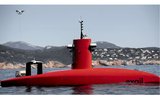
Naval primes dive into an underwater acquisition gold rush
A cluster of acquisitions by Fincantieri, Thales, Lockheed Martin and Rheinmetall points to a race to secure underwater warfare, autonomy and sensing capability.