Madfox takes to the water
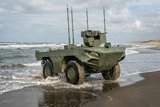
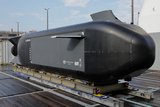
Madfox USV demonstrator. (Credit: LPhot Bradley/Crown Copyright)
A year of tests awaits for the latest UK Royal Navy uncrewed vessel.


The UK Royal Navy (RN) is continuing its efforts to explore the use of unmanned craft after welcoming into service the new Maritime Demonstrator For Operational Experimentation (Madfox) vessel.
Developed by L3Harris for NavyX ( the specialist wing of the RN that explores ways of boosting innovation in autonomous technologies), Madfox is derived from the Mast-13 vessel that underwent a series of trials beginning in late 2019.
‘Since being delivered, NavyX has been working hard to get Madfox to sea and ready to begin a demanding year of testing,’ the RN announced in a 26 March statement.
NavyX will carry out tests to see how USV technology can assist in surveillance and force protection operations.
‘With Madfox now directly in the hands of NavyX, the team will be able to explore a multitude of issues such as safety, regulatory compliance, new missions, new payloads and the role that a USV can play in complex operations and within the future fleet,’ said Cdr Antony Crabb, NavyX team leader.
As part of our promise to deliver comprehensive coverage to our Defence Insight and Premium News subscribers, our curated defence news content provides the latest industry updates, contract awards and programme milestones.
Related Equipment in Defence Insight

More from Naval Warfare
-
![US turns to allies to tackle navy shipbuilding backlog]()
US turns to allies to tackle navy shipbuilding backlog
A White House memorandum acknowledges US Navy shipbuilding backlogs and a weakened industrial base, opening a formal path for South Korean and Japanese yards to help rebuild capacity.
-
![US Navy’s $275 billion BBGN plan hinges on shipyard transformation]()
US Navy’s $275 billion BBGN plan hinges on shipyard transformation
The US Navy’s planned nuclear-powered warship carries a US$275 billion price tag, but the greater story lies in the industrial overhaul needed to build it, from AI-enabled design to digital twins and modular construction.
-
![Asia-Pacific emerges as the largest export market for US-made USVs]()
Asia-Pacific emerges as the largest export market for US-made USVs
Asian customers have placed one of the largest known international purchases of US-built uncrewed surface vessels, highlighting accelerating regional demand for autonomous maritime capabilities and distributed naval operations.