LPDs and MCMVs ahoy! India launches RfIs
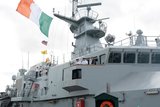
In terms of large amphibious warfare ships, the Indian Navy only has the 12,000t INS Jalashwa (the former USS Trenton) in service. (PIB)
Once thought to be further down the priority list, the Indian Navy is once again relaunching efforts for LPDs and MCMVs.


The Indian Navy (IN) issued an RfI on 24 August for four LPDs, resurrecting an earlier failed effort to acquire large amphibious assault ships. Another RfI was issued 11 days earlier in a desperate measure to plug a mine warfare capability gap.
Not unexpectedly, the LPD tender, which is more akin to an LHD, specifies that the quartet of ships must be built within India, although collaboration with a foreign partner is permissible. The first LPD is to be delivered within five years of contract signing, and ships will be handed over at yearly intervals after that.
The IN had
Our news & analysis is now part of Defence Insight®
A Basic-level or higher Defence Insight subscription is now required to view this content.

More from Naval Warfare
-
![US turns to allies to tackle navy shipbuilding backlog]()
US turns to allies to tackle navy shipbuilding backlog
A White House memorandum acknowledges US Navy shipbuilding backlogs and a weakened industrial base, opening a formal path for South Korean and Japanese yards to help rebuild capacity.
-
![US Navy’s $275 billion BBGN plan hinges on shipyard transformation]()
US Navy’s $275 billion BBGN plan hinges on shipyard transformation
The US Navy’s planned nuclear-powered warship carries a US$275 billion price tag, but the greater story lies in the industrial overhaul needed to build it, from AI-enabled design to digital twins and modular construction.
-
![Industry sees opportunity in Australia’s shift to networked undersea warfare]()
Industry sees opportunity in Australia’s shift to networked undersea warfare
Australia’s new defence innovation strategy indicates a shift from platform-centric to network-centric undersea warfare, with Ocius and Anduril Industries pointing to fast-growing opportunities for local industry.
-
![Asia-Pacific emerges as the largest export market for US-made USVs]()
Asia-Pacific emerges as the largest export market for US-made USVs
Asian customers have placed one of the largest known international purchases of US-built uncrewed surface vessels, highlighting accelerating regional demand for autonomous maritime capabilities and distributed naval operations.