Lockheed to undertake ‘configuration management changes’ for Freedom-class LCSs
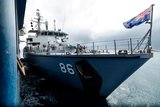
The bridge of USS Freedom on 12 April 2021. (Photo: USN/Mass Communication Specialist Seaman Richard Cho)
Are two contracts from NAVSEA related to the propulsion issues affecting Freedom-class LCS vessels?


Some Freedom-class Littoral Combat Ship (LCS) vessels in USN service will undergo ‘configuration management changes’ by May 2022, performed by Lockheed Martin Rotary and Mission Systems under two separate contract modifications worth a total of $48.19 million.
The DoD did not specify in a 7 July announcement which LCSs will be affected under the two contracts from Naval Sea Systems Command.
Shephard Defence Insight reports that propulsion issues have caused a halt in the production of the Freedom-class LCSs. There is a material defect with the vessels combining gear, this transmits power generated by the ship’s engines to its waterjet propulsion system.
The USN is working to design a fix for the in-service LCSs that are affected, while the service holds off on taking delivery of new vessels.
Related Equipment in Defence Insight



More from Naval Warfare
-
![Can the US Navy ask Indo-Pacific allies to do more while training with them less?]()
Can the US Navy ask Indo-Pacific allies to do more while training with them less?
As the Iran War draws US ships and marine corps units away from the Indo-Pacific, curtailed exercises and a temporary carrier gap are exposing tensions between Washington’s demand for more self-reliant allies and the joint training needed to realise that ambition.
-
![How could Rheinmetall’s GMF 140 fit with ongoing programmes in North America?]()
How could Rheinmetall’s GMF 140 fit with ongoing programmes in North America?
With Canada committed to its River-class replacement and the USN pursuing a lower-cost frigate, Rheinmetall will need to demonstrate where the GMF 140 can fill a capability gap in the North American fleet.
-
![South Korea, Japan and Turkey vie for US shipbuilding access in future frigate contest]()
South Korea, Japan and Turkey vie for US shipbuilding access in future frigate contest
Washington’s search for a foreign-built frigate could hand South Korea, Japan and Turkey a larger prize than a double-hull order: a foothold inside the US shipbuilding industrial base.
-
![Japan’s FY2027 budget bets on stand-off systems to offset demographic decline]()
Japan’s FY2027 budget bets on stand-off systems to offset demographic decline
Japan’s FY2027 defence budget backs stand-off strike, a 17-aircraft MQ-9B buy and a declared bid to lead the world in uncrewed maritime assets, alongside new frigates, submarines and support ships.