Lockheed Martin secures $12 million Japanese Aegis contract
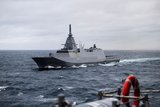
From left: the Japanese Hatakaze-class guided-missile destroyer JS Shimakaze, the Japanese Atago-class guided-missile destroyer JS Ashigara and the Canadian Halifax-class frigate HMCS Winnipeg. (Photo: US Navy)
Lockheed Martin has received an FMS contract modification to expand Aegis in-scope work.


Lockheed Martin is being awarded an FMS contract modification valued at over $12 million as part of the ongoing Japanese Aegis programme.
This award brings the total value of the contract to over $145 million.
The modification extends performance and expands the Aegis FMS in-scope work under existing contract line-item numbers.
The Japanese Maritime Self-Defense Force currently operates eight Aegis-equipped vessels: four Kongō-class destroyers, two Atago-class destroyers and two new Maya-class destroyers.
The new Maya-class destroyers were commissioned in March 2021, following the announcement that Japan would discontinue its acquisition of Aegis Ashore in June 2020.
According to Shephard Defence Insight, the Aegis SPY-1D (V) radar acquires and tracks multiple targets, handing off to the missile control station via the MK99 FCS.
The SPY-1D(V) is a transmitter that supports search, track and missile guidance functions, illuminating targets to be destroyed as commanded by the FCS.
Related Equipment in Defence Insight



More from Naval Warfare
-
![Australian industry programme builds pipeline for Virginia-class sustainment]()
Australian industry programme builds pipeline for Virginia-class sustainment
Australian businesses can now bid to support Virginia-class submarine sustainment in Western Australia, as momentum around the Henderson Defence Precinct also builds.
-
![South Korea, Japan and Turkey vie for US shipbuilding access in future frigate contest]()
South Korea, Japan and Turkey vie for US shipbuilding access in future frigate contest
Washington’s search for a foreign-built frigate could hand South Korea, Japan and Turkey a larger prize than a double-hull order: a foothold inside the US shipbuilding industrial base.
-
![Russia’s uncrewed boat portfolio hints at future naval demand]()
Russia’s uncrewed boat portfolio hints at future naval demand
Ukrainian intelligence has catalogued more than 20 Russian uncrewed surface vessels, revealing a portfolio weighted towards mine warfare and logistics, with implications for Western naval investment.
-
![Ukraine’s new long-range 12m autonomous vessel can deploy other drones]()
Ukraine’s new long-range 12m autonomous vessel can deploy other drones
Ukraine’s UForce unveiled the MV11 uncrewed surface vessel, designed to launch and support other naval drones at sea, fuelling debate over the future of autonomous maritime task groups.