Kongsberg, Thyssenkrupp form JV


Kongsberg and Thyssenkrupp Marine Systems have established a 50/50 joint venture (JV) company named KTA Naval Systems, the companies announced on 31 October.
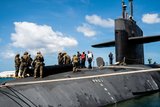
KTA Naval Systems will develop, produce and maintain combat systems for submarines supplied by Thyssenkrupp Marine Systems.
The German and Norwegian governments signed an agreement in June 2017 for the joint development, procurement, operation and maintenance of submarines and marine ordnance.
Thyssenkrupp and its partners are currently developing a detailed concept to offer four submarines to the Norwegian Navy and two submarines to the German Navy. The submarines will be based on the class 212A and tailored to the requirements of the two nations with extended range, speed and endurance to form a new 212CD class.
As part of the request for proposal, KTA Naval Systems would deliver the combat systems for the 212CD class as well as for future Thyssenkrupp Marine Systems submarines.
Eirik Lie, president of Kongsberg Defence and Aerospace, said: ‘The JV is an important step for us and the Norwegian defence industry.
‘We have been partnering with Thyssenkrupp for the past decades and are delighted to now take our partnership to the next level. Together we will deliver the next generation of combat systems and put smart defence in Europe into action.’

More from Naval Warfare
-
![US turns to allies to tackle navy shipbuilding backlog]()
US turns to allies to tackle navy shipbuilding backlog
A White House memorandum acknowledges US Navy shipbuilding backlogs and a weakened industrial base, opening a formal path for South Korean and Japanese yards to help rebuild capacity.
-
![US Navy’s $275 billion BBGN plan hinges on shipyard transformation]()
US Navy’s $275 billion BBGN plan hinges on shipyard transformation
The US Navy’s planned nuclear-powered warship carries a US$275 billion price tag, but the greater story lies in the industrial overhaul needed to build it, from AI-enabled design to digital twins and modular construction.
-
![Asia-Pacific emerges as the largest export market for US-made USVs]()
Asia-Pacific emerges as the largest export market for US-made USVs
Asian customers have placed one of the largest known international purchases of US-built uncrewed surface vessels, highlighting accelerating regional demand for autonomous maritime capabilities and distributed naval operations.