Kharg loss hurts Iranian pride
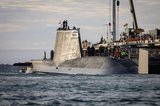
IRIS Kharg sank on 2 June. (Photo: Mehr News Agency)
The loss of IRIS Kharg was the latest disaster to befall the Iranian navy but there are no plans to build or buy a replacement.


IRIS Kharg, an Islamic Republic of Iran Navy (IRIN) Ol-class fleet replenishment oiler, sank in the Gulf of Oman during a training mission on 2 June following an onboard fire.
A 20h firefighting effort was not enough to save the ship, the crew of which was transferred to shore before it sank. However, 33 people were injured.
The cause of the blaze remains unknown and Iranian officials are still investigating the incident.
Kharg was the only large fleet oiler available to the Iranian Navy, launched by UK shipyard Swan Hunter in 1977 for the pre-revolutionary regime in Iran. At
Our news & analysis is now part of Defence Insight®
A Basic-level or higher Defence Insight subscription is now required to view this content.


More from Naval Warfare
-
![Five years on: where could opportunities emerge next for AUKUS Pillar II?]()
Five years on: where could opportunities emerge next for AUKUS Pillar II?
Payload commonality, combat systems and electronic warfare are emerging as likely priorities as the trilateral partnership balances building submarines with sharing industrial ecosystems.
-
![Singapore expands maritime presence with future-ready Sentinel OPV]()
Singapore expands maritime presence with future-ready Sentinel OPV
Singapore is building space for uncrewed systems and future technologies into its new Sentinel-class OPVs, reflecting a wider move towards adaptable vessels capable of maintaining persistent maritime presence.
-
![From the Baltic to the Gulf: where USV procurement is heading next]()
From the Baltic to the Gulf: where USV procurement is heading next
Saildrone’s new Copenhagen base is one sign of a larger shift, as navies globally turn to uncrewed vessels for surveillance and mine clearance.
-
![Israeli Navy looks to expand as war reshapes future force requirements]()
Israeli Navy looks to expand as war reshapes future force requirements
Israel’s navy is preparing for a larger and more technically diverse role, but its ambitions could be impacted by supply chain restrictions, accelerating demand for domestic naval production as well as autonomous maritime capabilities.
-
![Quantum sensing gathers pace as navies eye undersea advantage]()
Quantum sensing gathers pace as navies eye undersea advantage
As AI dominates defence conversations, industry increasingly points to quantum sensing as the technology set to change submarine and uncrewed underwater vehicle operations.