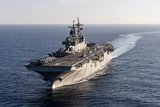
Japan and China commission new destroyers


Japan commissioned its second and final Asahi-class guided-missile destroyer on 27 February. Meanwhile, China continues its massive naval build-up with the commissioning of yet more warships.
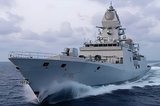
JS Shiranui (pennant number 120) was welcomed into the Japan Maritime Self-Defense Force (JMSDF), and it will be stationed at Ominato Base in Mutsu, Aomori Prefecture. The destroyer will be part of Escort Division 7 of Escort Flotilla 3.
This 5,100t Japanese warship built by Mitsubishi Heavy Industries (MHI) measures 151m long. Its first-of-class sister ship, JS Asahi, was commissioned on 8 March 2018. Two General Electric LM2500 gas turbines in a
Our news & analysis is now part of Defence Insight®
A Basic-level or higher Defence Insight subscription is now required to view this content.


More from Naval Warfare
-
![Competitive P17B tender marks a shift in Indian Navy frigate procurement]()
Competitive P17B tender marks a shift in Indian Navy frigate procurement
The Indian Navy's P17B programme is expected to combine greater weapons capacity with a competitive domestic construction model, although key systems could remain dependent on international supply chains.
-
![How France’s SNLE 3G programme is reshaping the naval nuclear industrial base]()
How France’s SNLE 3G programme is reshaping the naval nuclear industrial base
Extending far beyond a four-submarine replacement programme, France’s ballistic missile submarine effort is a decades-long industrial initiative designed to preserve the country’s ability to build and sustain nuclear-powered strategic platforms.
-
![Quantum Systems enters maritime domain with Baltic-focused USV and UUV]()
Quantum Systems enters maritime domain with Baltic-focused USV and UUV
Quantum Systems has launched into the maritime domain with Seavex and Subvex, aiming to close a Baltic Sea ISR gap opened by infrastructure sabotage.
-
![Suppliers await next step in Australia’s mine warfare transition]()
Suppliers await next step in Australia’s mine warfare transition
Australia’s mine countermeasure capability remains in flux as the Huon-class nears retirement, but accelerated investment in autonomous systems is opening a path for industry.
-
![Can the US Navy ask Indo-Pacific allies to do more while training with them less?]()
Can the US Navy ask Indo-Pacific allies to do more while training with them less?
As the Iran War draws US ships and marine corps units away from the Indo-Pacific, curtailed exercises and a temporary carrier gap are exposing tensions between Washington’s demand for more self-reliant allies and the joint training needed to realise that ambition.