Israeli Navy looks to expand as war reshapes future force requirements
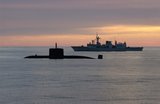
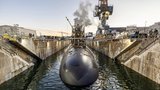
INS Drakon is the Israeli Navy’s sixth submarine and the third in the series to be equipped with an air-independent propulsion system. (Photo: Under Broen/Kurt Pedersen/X)
Israel’s navy is preparing for a larger and more technically diverse role, but its ambitions could be impacted by supply chain restrictions, accelerating demand for domestic naval production as well as autonomous maritime capabilities.


On the eve of the arrival in Haifa of the Israeli Navy’s sixth submarine, INS Drakon, naval officials said the war with Iran had underscored the strategic importance of the maritime domain and the need to safeguard freedom of navigation, trade routes and Israel’s security and economic interests.
The war has contributed to the acceleration of the global naval arms race, particularly in the region. The Turkish Navy, for example, is the second-largest in NATO after the US Navy. Turkey currently operates 12 submarines, has two more under construction, and plans to expand its submarine fleet to 18 vessels.
Our news & analysis is now part of Defence Insight®
A Basic-level or higher Defence Insight subscription is now required to view this content.


More from Country-focused updates
-
![Poland land systems focus: €31 billion spending drive boosts domestic production ambitions]()
Poland land systems focus: €31 billion spending drive boosts domestic production ambitions
Poland’s potential €53 billion land procurement pipeline could give it one of Europe’s largest armoured vehicle fleets, with local production, technology transfer and future exports central to the strategy.
-
![European funding and NATO interoperability could shape Polish helicopter plans]()
European funding and NATO interoperability could shape Polish helicopter plans
Poland is seeking to update its transport helicopters as part of a wider military aviation modernisation programme, with EU funding requirements and NATO interoperability key considerations.
-
![Poland air focus: $8.27 billion UAV market highlights value of long-term supplier relationships]()
Poland air focus: $8.27 billion UAV market highlights value of long-term supplier relationships
Poland’s growing investment in UAVs highlights how recurring procurement contracts and continuous technological development can provide suppliers with sustained opportunities beyond initial acquisitions.
-
![Canada’s submarine availability under pressure as Chicoutimi is unlikely to return to front-line duties]()
Canada’s submarine availability under pressure as Chicoutimi is unlikely to return to front-line duties
HMCS Victoria and HMCS Windsor could return from their current deep maintenance, but unconfirmed operational timelines leave questions over patrol capacity before the first CPSP arrives.
-
![Canada accelerates uncrewed aerial system procurement for NATO and Arctic forces]()
Canada accelerates uncrewed aerial system procurement for NATO and Arctic forces
Canada plans to acquire at least 120 uncrewed aerial systems through two competitions with combined funding ceilings of C$32 million.