“Capital follows confidence” as defence courts private money
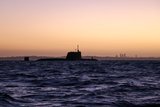
Saronic’s 55m Marauder autonomous vessel, developed through private investment and selected for the US Navy’s Medium Uncrewed Surface Vessel Marketplace on-water demonstrations. (Photo: Saronic)
Outside investment and the direction in which venture money flows may reveal what defence will buy years before formal programmes begin.


Governments cannot expect to develop, finance and scale every good defence idea through traditional procurement alone, according to Phil Siveter, chief executive of Thales UK, who used the company’s technology summit on 14 September to argue that defence must get better at attracting private capital.
Pension funds, infrastructure investors, private equity and venture capital were all prepared to back technology, manufacturing capacity and infrastructure “where there is a credible demand signal and an investable proposition”, Siveter said. Despite the recent flurry of investment in startups and scale-ups, he added, “honestly, this is not enough”.
In his view, the missing ingredient was
Our news & analysis is now part of Defence Insight®
A Basic-level or higher Defence Insight subscription is now required to view this content.




More from Defence Notes
-
![UK urged to prioritise sea, air and space over heavy armour]()
UK urged to prioritise sea, air and space over heavy armour
A report from the Council on Geostrategy argues the UK should move away from a traditional balanced force and shift investment to naval, air and space capabilities, backed by a larger fleet of attack submarines and deeper AUKUS integration.
-
![Thales: deployment speed to determine winners in ‘production versus production’ era]()
Thales: deployment speed to determine winners in ‘production versus production’ era
At its technology summit in London, attended by Shephard, Thales UK examined the importance of speed to delivery, the growing focus on cross-domain capabilities and how procurement reform could be crucial for future battlefield advantage.
-
![Orchestrating operational readiness across every defence domain]()
Orchestrating operational readiness across every defence domain
Are all systems ready for the next mission? Have upgrades been applied? Are all assets aligned to deploy together, on time and fully prepared? In modern defence operations, readiness is no longer measured platform by platform. It is measured by how well people, assets, data and decisions move together — across land, sea and air.
-
![Global tensions drive defence supply chain scrutiny]()
Global tensions drive defence supply chain scrutiny
Governments worldwide are scrambling to decouple defence supply chains from dependency upon strategic rivals, but countries could struggle to do it all themselves.