Israel buys five Reshef missile ships to bolster its arsenal
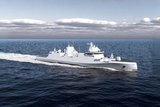
An artist’s impression of the new Reshef vessel. (Image: Israel Shipyards)
The five Reshef corvettes are expected to patrol Israel’s Exclusive Economic Zone and critical infrastructure.


Israel’s Ministry of Defense (MoD) has signed off on the purchase of five Reshef-class missile ships from Israel Shipyards, at a cost of approximately US$780M.
Maj. Gen. (Res.) Eyal Zamir, director general of the Israeli MoD, approved the procurement agreement on 12 December, but the Reshef class has been on the MoD’s radar for some time, as a replacement to the Sa’ar 4 and Sa’ar 4.5-class of fast-attack vessels.
Under the agreement, Israel Shipyards will produce and supply the ships to the Israeli Navy over the next six years, with an option left open for the Navy to procure additional vessels as needed in the future.
Related Articles
Israel Shipyards to design new Reshef class
Reshef steps closer to production
The Reshef-class multi-mission vessel was developed in collaboration with the Israeli Navy, incorporating the most advanced weapon systems from across Israel’s naval defence industry.
Once the Reshef-class is in place, the Sa’ar 4.5-class missile ship will be decommissioned, after having been in service for four decades.
The vessels will be built within Israel, and Zamir described the Reshef acquisition as “an integration of security, economic, and industrial priorities”.
He added: “These new vessels will strengthen the Israeli Navy’s expanding maritime capabilities. Manufacturing them locally in Israel will maintain and grow the nation’s exclusive strategic production line for combat vessels and enhance operational independence and continuity while securing hundreds of jobs in Israel.”
Zamir said he also expected that other nations would look to follow the Israeli Navy’s example and acquire Reshef-class vessels of their own, making the class a viable Israeli export.
Related Programmes in Defence Insight
Related Equipment in Defence Insight

More from Naval Warfare
-
![US Navy $76.6bn award provides stability for submarine production]()
US Navy $76.6bn award provides stability for submarine production
The US Department of War’s US$76.6 billion Columbia-and Virginia-class submarine contract gives industry demand certainty as Washington seeks to rebuild its shipbuilding base.
-
![Dreadnought Phase 4 opens £2.5 billion supply chain opportunity]()
Dreadnought Phase 4 opens £2.5 billion supply chain opportunity
The UK government’s £8.4 billion Dreadnought Phase 4 investment sets aside £2.5 billion for the wider submarine supply chain, opening new work beyond BAE Systems’ prime contract.
-
![A400M trial demonstrates airborne deployment of uncrewed surface vessel]()
A400M trial demonstrates airborne deployment of uncrewed surface vessel
Kraken Technology Group’s A400M airdrop of a K3 Scout uncrewed surface vessel points to a new way for navies to insert USVs into contested waters, bypassing ports and motherships.